

Real estate leads rarely convert after a single interaction. A buyer might browse listings for months before scheduling a showing, while a seller may research pricing strategies long before they’re ready to list.
That’s why consistent follow-up matters — but manually checking in with every lead quickly becomes overwhelming. Between showings, contracts, prospecting, and client communication, most agents simply don’t have time to send perfectly timed follow-ups to every contact in their database.
Real estate drip campaigns solve that problem by automating lead nurturing over time. Instead of relying on memory or sticky notes, agents can automatically send targeted emails, listing alerts, market updates, and follow-up messages based on a lead’s interests and behavior.
When done well, real estate drip campaigns help agents stay top of mind, build trust, and convert more leads without adding hours of manual work each week.
In this guide, we’ll explain how real estate drip campaigns work, why they matter, common campaign types, and how integrated IDX + CRM systems like iHomefinder help agents automate lead nurturing more effectively.
What Are Real Estate Drip Campaigns?
Real estate drip campaigns are automated sequences of messages sent to leads over time. Instead of sending one generic follow-up email, agents create a drip email campaign that follows the customer journey and gradually “drips” helpful content, listing updates, reminders, and check-ins based on where a lead is in their buying or selling journey.
These campaigns typically use a mix of:
- Text messages
- Property alerts
- Market updates
- Appointment reminders
- Behavioral triggers
Email drip campaigns often work best as a multi-touch system that also includes phone call reminders and mailers, and the most effective sequences are triggered by user actions rather than fixed dates.
The goal is simple: stay consistently visible until the lead is ready to take action.
For example, a buyer who registers on your IDX website might automatically receive:
- A welcome email
- New listing alerts based on saved searches
- Neighborhood guides
- Mortgage and financing tips
- Showing invitations
- Follow-up reminders when they revisit listings
All of this happens automatically in the background while the agent focuses on active clients and deals.
Why Do Real Estate Drip Campaigns Matter for Lead Nurturing?
Most real estate leads aren’t quite ready to buy or sell immediately. In fact, very few leads become clients overnight. Buyers often spend months researching neighborhoods, monitoring inventory, and evaluating financing options before making a move.
Sellers may wait until interest rates change, school schedules shift, or market conditions improve before listing their homes.Without consistent follow-up, many of those leads simply forget who you are.
Real estate drip campaigns help real estate agents stay connected with leads long before they’re ready to commit, so they remain top-of-mind when it’s time to make a decision.
Build Trust with Consistent Real Estate Follow-Up
Most leads work with the agent they remember and trust most when they’re finally ready to act. Consistent communication helps agents:
- Stay top of mind
- Demonstrate expertise
- Build credibility gradually
- Create familiarity before a direct sales conversation
That kind of consistent follow-up supports relationship-building in the real estate world.
Even simple automated touchpoints — like monthly market updates or personalized property alerts — help strengthen that relationship over time.
Save Time with Automated Real Estate Drip Campaigns
Manually following up with hundreds of leads is nearly impossible for most agents, which is why automated email workflows help a real estate business save time while scaling follow-up.
Real estate drip campaigns reduce repetitive work by automating:
- Welcome emails
- Listing alerts
- Open house follow-ups
- Seller check-ins
- Long-term nurture sequences
This also helps ensure no lead slips through the cracks. Instead of writing every message individually, agents can build workflows once and let automation handle ongoing communication.
Improve Real Estate Lead Conversion with Behavioral Follow-Up
Modern real estate drip campaigns go beyond scheduled emails. Many systems can trigger follow-up based on actual lead behavior, helping agents spot cold leads warming up and identify the hottest leads sooner.
For example:
- A buyer repeatedly views homes in one neighborhood
- A lead saves multiple listings
- A seller revisits a home valuation page
- A prospect opens several emails in a short period
These actions often signal growing intent.
Integrated IDX and customer relationship management platforms like iHomefinder help agents track this behavior automatically so follow-up becomes more timely and relevant, and automated real estate CRM systems can track how leads interact with automated emails to flag stronger intent.
How Real Estate Drip Campaigns Work
Every real estate drip campaign starts with lead capture. Let’s break down the sequence so you can better apply each step to your unique business.
Step 1: Capture Real Estate Leads
Every real estate drip campaign starts with lead capture.
Common lead sources might include:
- IDX website registrations
- Home valuation forms
- Facebook and Google ads
- Open house sign-ins
- Referral inquiries
- Buyer guides or downloadable resources
Once a lead enters the system, automation begins. The lead source and actions like requesting info on a specific property can trigger the first sequence at the right time.
Step 2: Segment Leads for Personalized Drip Campaigns
Not every lead should receive the same messaging, so segment by lead type and audience.
Effective real estate drip campaigns segment contacts based on factors like:
- Buyers vs. sellers
- Price range
- Neighborhood interests
- Timeline readiness
- First-time buyers
- Investors
- Luxury clients
Segmentation can also reflect location, buying stage, and separate campaign tracks for groups like first-time buyers versus luxury sellers. Additionally, segmentation helps agents send more relevant content instead of generic mass emails, which can improve engagement rates.
For example, a first-time buyer may benefit from financing education and home search tips, while an investor may care more about cash flow opportunities and market trends, so tailoring messaging to each group’s needs works better than sending the same message to everyone.
Step 3: Automate Real Estate Lead Nurturing
Once segmented, leads enter automated workflows designed around their needs and stage in the funnel, and one of the most effective ways to nurture them is to share helpful, valuable information instead of pushing for the sale.
Common drip campaign content includes:
- New listing alerts
- Price reduction notifications
- Market updates
- Seller preparation checklists
- Neighborhood spotlights
- Financing tips
- Testimonials and case studies
- Open house invitations
- Buyer follow-ups with relevant listings, neighborhood market reports, and home-buying tip sheets
- Automated CMAs, staging tips, and seller checklists for seller leads
Educational, lightly entertaining content should outweigh promotional asks and provide far more value than they request.
The best real estate drip campaigns focus on providing value instead of constantly asking for business.
Step 4: Use Real Estate CRM Data to Trigger Personal Follow-Up
Automation should support relationships rather than replace them. A strong real estate drip campaign works best when automated outreach still feels like a personal email, helping agents identify when a lead becomes highly engaged so they can step in personally.
For example:
- A buyer schedules multiple listing viewings
- A lead responds to an email
- A seller repeatedly checks valuation updates
- A contact revisits the website several times in one week
When agents step in, they should address the lead’s interests directly, using a personalized approach like their name and relevant details.
This combination of automation and personal follow-up is where many conversions happen.
Types of Real Estate Drip Campaigns
Different types of real estate drip campaigns serve different goals, from nurturing new buyer leads to staying connected with past clients. Below, we’ll break down the most common real estate drip campaigns agents use and how each one helps automate follow-up and improve lead conversion.
Buyer Real Estate Drip Campaigns
Buyer drip campaigns are designed to guide prospects through the home search process while helping nurture new leads and keeping agents visible. When someone repeatedly searches one area or ZIP code, the system can automatically send more relevant listings and property updates.
Common buyer drip campaign content includes:
- New listings
- Saved search alerts
- Mortgage and financing education
- Neighborhood guides
- Market trend updates
- Showing preparation tips

Integrated IDX systems make these campaigns significantly more personalized because property search activity automatically informs follow-up.
Seller Real Estate Drip Campaigns
Seller drip campaigns are built specifically to nurture seller leads before they are ready to list.
These campaigns often include:
- Home valuation updates
- Seller preparation checklists
- Local market reports
- Pricing strategy education
- Staging tips
- Case studies and testimonials
Because many homeowners research long before contacting an agent, long-term seller nurturing is especially important.
Open House Real Estate Drip Campaigns
Open house leads can go cold quickly without immediate follow-up.
A simple open house drip campaign might include:
- A thank-you email
- Similar listing recommendations
- Financing resources
- Scheduling prompts for private showings
- Market reports for the area
Automation helps agents maintain momentum after the event ends.
Long-Term Real Estate Lead Nurturing Campaigns
Not every lead is ready now — and that’s okay. A good rule is to match email frequency to what contacts expect based on the sign-up process.
Long-term nurture campaigns help agents stay visible for months or even years through:
- Monthly newsletters
- Local market updates
- Seasonal homeowner tips
- Community content
- Real estate trend updates
Longer, higher-stakes decisions like home buying usually need longer nurture sequences.
These campaigns keep agents top of mind without requiring daily manual outreach.
Real Estate Drip Campaign Examples
| Day | Message | Goal |
|---|---|---|
| Day 1 | Welcome email | Introduce the agent to new leads and outline next steps |
| Day 3 | Automated property update | Move leads toward action at just the right moment |
| Day 7 | Financing tips | Build trust, using practical and honest tips |
| Day 14 | Neighborhood guide | Provide value about the local community |
| Day 21 | Showing invitation | Encourage action and inspire to make a decision |
Example Seller Real Estate Drip Campaign Workflow
A seller real estate drip campaign should focus on building trust, educating homeowners, and staying visible throughout the often lengthy decision-making process. Here’s an example of how an automated seller nurture workflow might look over the first 30 days after a lead enters your CRM.
| Day | Message | Goal |
|---|---|---|
| Day 1 | Home valuation follow-up | Start conversation |
| Day 5 | Seller prep checklist | Build authority |
| Day 10 | Local market update | Reinforce urgency |
| Day 20 | Success story or testimonial | Build trust |
| Day 30 | Consultation invitation | Encourage conversion |
Real Estate Drip Campaign Best Practices
The most effective real estate drip campaigns do more than automate emails. They go beyond the basics and deliver relevant, timely communication that feels personal and helpful to each lead.
Below are some best practices agents can use to improve engagement, build stronger relationships, and increase conversion opportunities over time.
Personalize Your Real Estate Drip Campaigns
Generic campaigns often feel automated and easy to ignore. The best real estate drip campaigns personalize messaging using:
- Names
- Neighborhood interests
- Saved searches
- Property preferences
- Behavioral triggers
A/B testing different subject line variations and sending times can help identify what gets the best engagement.
The more relevant the messaging feels, the higher the engagement tends to be.
Focus on Creating Helpful Real Estate Content
Leads respond better to education and value than constant sales pitches.
Strong drip campaign content helps answer common questions and reduce uncertainty throughout the buying or selling process.
Avoid Over-Automating Real Estate Follow-Up
Automation should enhance relationships, not make communication feel robotic. Simply sending emails is not enough if the messages never feel timely or human. Agents should still:
- Personally respond to replies
- Call highly engaged leads
- Add a quick check-in to customize important conversations
- Step in during key decision moments
Use Email, SMS, and IDX Alerts Together
Email alone is not always enough in digital marketing.
Many real estate drip campaigns perform better when they combine email, IDX alerts, and text messages as part of a broader multi-channel strategy:
- text messages
- Property alerts
- Retargeting ads
- CRM notifications
Some teams also layer in call reminders or mailers to support follow-up.
This creates multiple opportunities for engagement across different channels.
Common Real Estate Drip Campaign Mistakes
Even well-designed real estate drip campaigns can fall short if the automation feels too generic or disconnected from a lead’s actual needs and behavior. Here are some of the most common real estate drip campaign mistakes agents should avoid when building automated follow-up workflows.
Sending the Same Real Estate Drip Campaign to Every Lead
Buyers, sellers, investors, and past clients all have different needs.
One-size-fits-all campaigns usually lead to lower engagement and unsubscribes. In fact, this is the biggest mistake many agents make with drip campaigns.
Ignoring Real Estate Lead Behavior
Behavioral data is one of the biggest advantages of modern real estate automation.
Agents who ignore actions like repeated listing views or saved searches may miss important buying signals.
Using Disconnected Real Estate CRM and IDX Tools
When IDX websites, CRM systems, and email marketing tools don’t communicate well, automation becomes less effective.
Disconnected systems can create:
- Delayed follow-up
- Duplicate outreach
- Poor segmentation
- Missed engagement opportunities
Platforms like iHomefinder help solve this by connecting IDX lead capture, property search behavior, and CRM automation in one system.
What to Look for in Real Estate Drip Campaign Software
The best real estate drip campaign platforms go beyond simple email automation.
Important features include:
- IDX integration
- CRM functionality
- Automated listing alerts
- Behavioral triggers
- Lead segmentation
- Mobile notifications
- Email and SMS workflows
- Reporting and analytics
Good reporting should help teams monitor open rates and clicks, since tracking analytics like click-through rates helps gauge engagement effectiveness.
IDX integration is especially valuable because property search behavior often provides the clearest signal of buyer intent.
When your CRM and IDX platform work together, follow-up becomes much more personalized and timely, and stronger reporting gives a team leader a clearer way to improve performance over time.
How Does iHomefinder Supports Real Estate Campaigns?
iHomefinder combines IDX websites, CRM functionality, lead capture, and automation tools in one connected platform. This allows agents to:
- Capture leads directly from their IDX website
- Track saved searches and listing activity
- Automate property alerts
- Segment leads more effectively to automate follow ups based on engagement
- Trigger follow-up based on buyer behavior
- Keep lead data centralized
Using click segmentation, contacts can be moved into new nurture paths for more targeted follow-up campaigns.
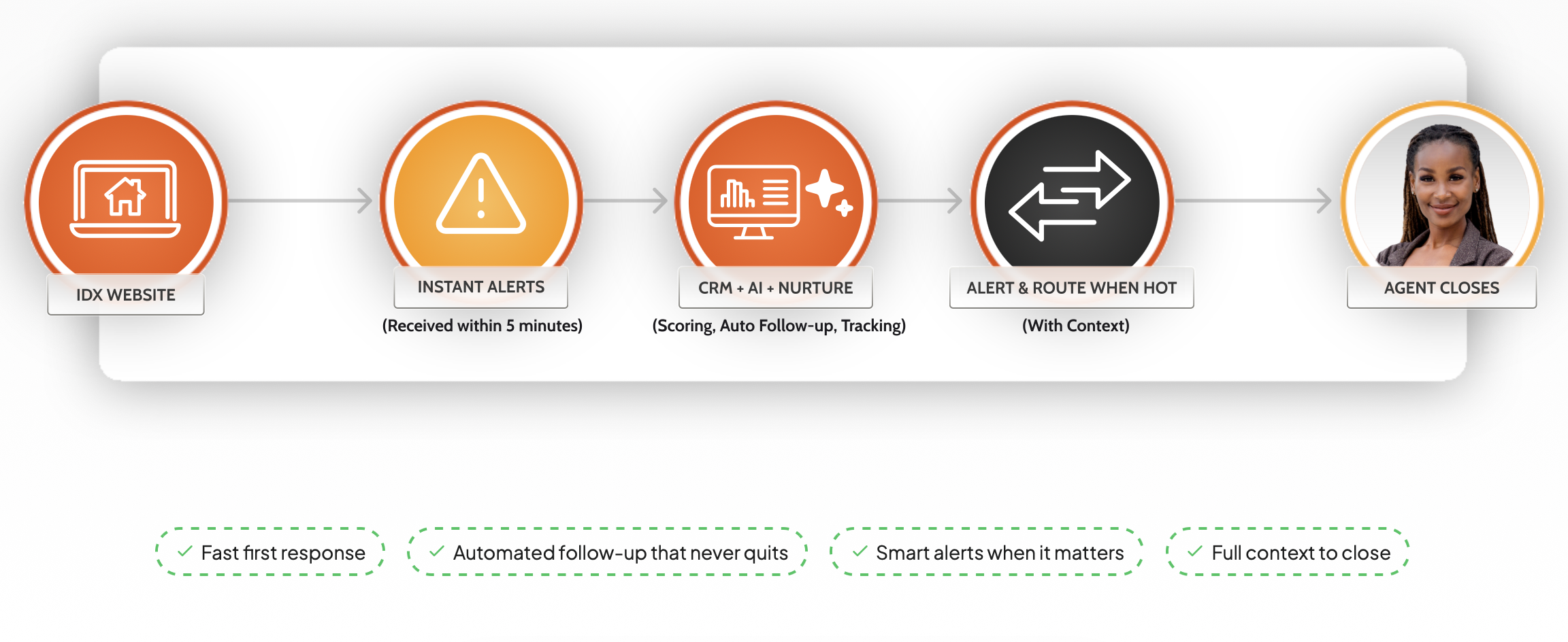
Instead of managing separate tools for website leads, IDX search, and CRM follow-up, agents can create more personalized nurture campaigns from a single system.
Final Thoughts
Real estate drip campaigns help agents stay consistent, visible, and relevant throughout long buying and selling cycles. The right automation strategy can save time, improve follow-up consistency, and stronger nurturing can lead to more deals and more closed deals over time without adding hours of manual work every week.
The most effective real estate drip campaigns combine automation with personalization — especially when IDX search behavior and CRM workflows are connected together.
For agents looking to automate lead nurturing more effectively, iHomefinder combines IDX websites, CRM tools, and behavioral automation into one streamlined system.