

Real estate leads move fast. A buyer might browse listings at lunch, request info on a home, and connect with another agent 20 minutes later.
If your follow-up depends on manual texts, emails, and reminders, it’s easy for opportunities to slip through the cracks.
That’s why more agents are automating lead follow-up. The goal isn’t to replace personal connection — it’s to create consistent, timely communication at scale. The most effective systems connect IDX website activity directly to CRM follow-up, helping agents respond faster, stay organized, and nurture leads throughout longer buying timelines.
What Does Automated Lead Follow-Up Actually Look Like?
Automated follow-up uses software to send messages, assign tasks, and trigger automated workflows based on what a lead does — not just whether they filled out a form.
Automated workflows and lead capture forms should collect and manage new leads, ensuring that no opportunity is missed from the start.
Most agents are familiar with the form-fill trigger: someone submits a contact request and gets an auto-reply. That’s a start, but it’s a fraction of what a properly integrated lead capture system can do.
With IDX-connected automation, triggers can include:
- A new registration on your website via lead capture forms
- A saved property search
- A home valuation request
- Repeated visits to a specific listing
- A price range filter that shifts
- A lead returning to your site after 30 days of inactivity
Capturing hot leads at the right moment is crucial, and marketing tools can help deliver relevant information based on each lead’s actions, increasing engagement and conversion potential.
Each of those signals tells you something about where that person is in their process. The automation should respond accordingly — not with a generic “just checking in” message, but with something relevant to what they actually did.
That’s the difference between automation that feels like spam and automation that feels like good service. A structured follow up system ensures that hot leads are never missed and every opportunity is maximized.
Why IDX Integration Is the Foundation, Not a Feature
Most customer relationship management (CRM) discussions focus on contact management and email sequences. But without IDX integration, your follow-up lacks context.
When leads register on your IDX website, you gain valuable behavioral data — including saved listings, search activity, price ranges, and return visits. That insight makes follow-up more relevant and effective.
With iHomefinder, your CRM and IDX website work together in one connected system. Lead activity automatically feeds into contact records and triggers follow-up automation based on real behavior, not guesswork. Agents and brokers can reduce admin tasks, stay organized, and spend more time building client relationships and closing deals. Instead of manually piecing together data from different systems, the platform connects everything for you.
This matters because:
Personalization Requires Data
You can’t send a relevant follow-up about a $600K listing in a specific neighborhood if you don’t know that’s what the lead is actually looking at.
Timing Requires True Signals
A lead who viewed a listing three times in the last 48 hours is not the same as a lead who hasn’t logged in for 60 days. The follow-up should be different — and with IDX behavioral tracking, it can be.
Long-Term Nurture Requires Engagement
Listing alerts that reflect a lead’s actual saved search criteria keep them returning to your site instead of drifting to Zillowor Realtor.com. That return traffic is both a conversion opportunity and a signal worth responding to.
A CRM system can help real estate professionals manage leads by organizing contact information, tracking interactions, and automating follow-up tasks, which enhances overall efficiency and effectiveness in lead management. Automated lead management through a CRM allows agents to respond to inquiries quickly and consistently, reducing the risk of missed opportunities and improving conversion rates.
The Core Automations Worth Setting Up
Not every workflow needs to be complicated. A handful of well-built sequences will cover the majority of your lead communication. Automation streamlines lead generation and helps capture leads efficiently, enabling agents to reach more potential clients and nurture relationships from the start.
When leveraging automation, using pre-built marketing tools and maintaining consistent branding ensures that every interaction with potential clients is professional and on-message. This approach not only supports a structured follow up process but also helps nurture high quality leads, increasing the chances of conversion.
After setting up these core automations, remember that automated follow-up systems allow real estate professionals to maintain consistent communication with leads, which is crucial for nurturing relationships and increasing the likelihood of closing deals.
Instant Response for New Registrations
The right moment for follow-up is immediately after an initial inquiry — not hours later. Set up automation so every new IDX registration triggers a fast, personalized response.
Keep the first message simple and useful. Reference the neighborhood, price range, or listings the lead viewed, introduce your team, and include a clear next step like scheduling a call or viewing updated listings. Even a short text such as, “I saw you’re searching in El Paso — here are the newest homes available,” feels more personal than a generic auto-reply.
Fast communication helps keep leads engaged, prevents opportunities from slipping away, and improves your chances of closing more deals.
Listing Alert Campaigns
This is the most underutilized long-term nurture tool in real estate. Listing alerts connected to a lead’s actual saved search criteria do two things: they keep the lead engaged with your website instead of third-party portals, and they give you a consistent reason to be in their inbox without it feeling like marketing.
By providing helpful information and educational content—such as market updates, tips, and property matches—you maintain a lead’s interest and deliver ongoing value.
Leads who get relevant alerts come back.These campaigns also help agents stay connected with both leads and past clients, fostering stronger relationships and increasing referral opportunities.
Long-Term Drip Campaigns for Buyers Who Aren’t Ready Yet
Not every lead is ready today. In most real estate businesses, the time between first contact and closing can take months, which is why consistent follow-up matters.
The key is segmenting leads based on their timeline and interests. Real estate agents can create separate drip campaigns for first-time buyers, investors, or luxury clients so communication stays relevant over time. Share practical content like neighborhood guides, financing tips, market updates, and new listings to stay top of mind without manually checking in every week.
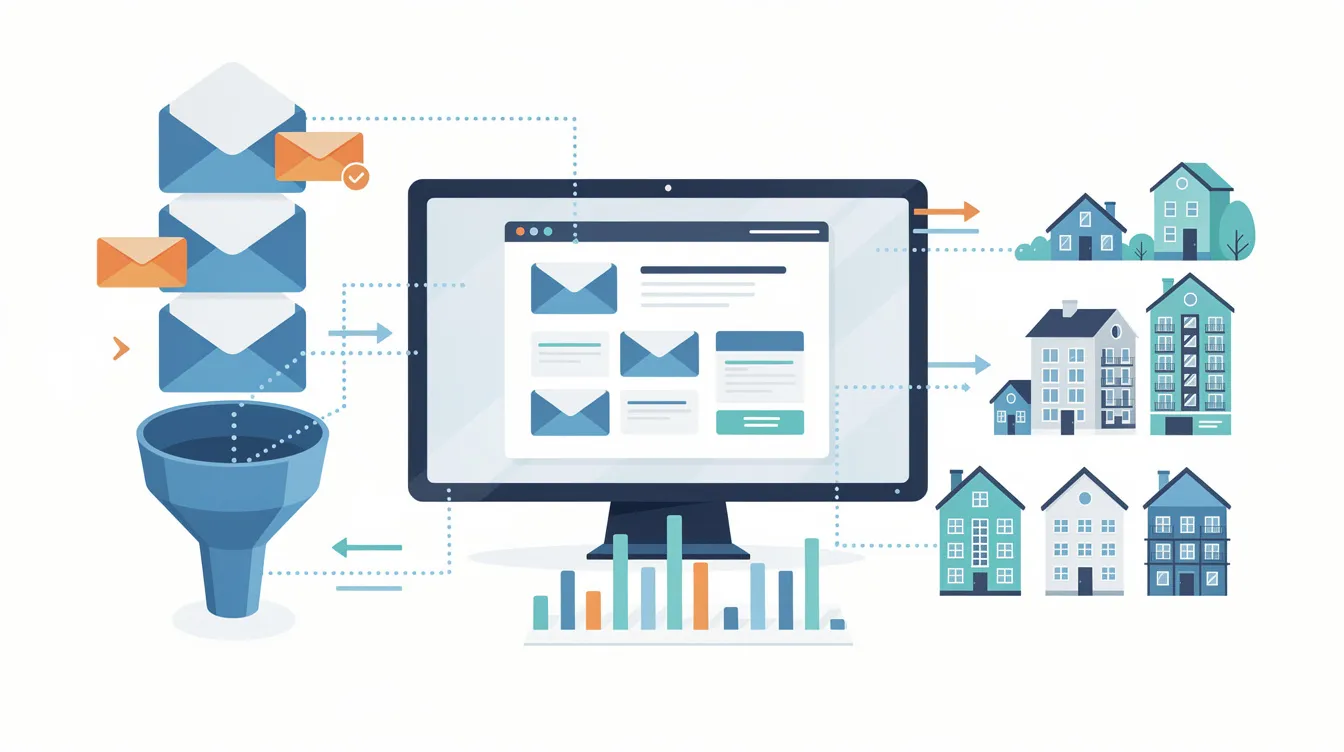
Most leads won’t convert after one conversation, but consistent, targeted follow-up helps build trust until they’re ready to move. Automation tools and tagging systems also help agents quickly identify which leads are actively searching versus those still in the research phase.
Property Inquiry Follow-Up
When a lead inquires about a specific property, momentum is at its highest. That window is short.

An automated inquiry workflow should immediately send similar listings, showing availability, financing resources, and a direct scheduling link. Marketing automation ensures that relevant information reaches the lead at the right moment, maintaining consistent branding and efficient communication. AI can draft more personalized and relevant messages based on each lead’s specific needs and situation, making follow-up feel more useful.
Integrating these tasks within your automation platform avoids disconnected tasks, ensuring a seamless and structured follow-up process. The goal is to convert expressed interest into an appointment before the lead’s attention moves elsewhere.
Open House Follow-Up
Open houses generate a volume of new contacts that’s hard to follow up with manually in any reasonable timeframe. Automation makes the process manageable. Solo agents and brokers can benefit from pre-built templates that ensure consistent branding and the same level of professionalism in every open house follow-up, regardless of team size or experience.
A standard open house workflow includes a same-day thank-you, related listings within their apparent price range, an invitation to schedule a private showing, and a reminder to a week out. This keeps the conversation going without requiring you to write 30 individual follow-up messages after every event.
Re-Engagement for Inactive Leads
Cold leads are not dead leads. Many go quiet for weeks or months and then re-enter the market — often without reaching back out to the last agent they talked to, simply because that agent has moved on.
Automated re-engagement campaigns watch for inactivity and restart the conversation with something relevant: a new listing that matches their previous search criteria, a market update for their target neighborhood, or a price reduction on a property they viewed.
These efforts are essential for building relationships over time and help agents stay ahead by targeting leads who may become ready to act in the future. iHomefinder’s behavioral tracking identifies when a previously inactive lead starts engaging with your site again, which is often the clearest signal that it’s time to reach out.
How to Personalize Automation Without Making It Feel Like Automation
The failure mode here is volume without relevance — too many messages, not enough signal. Here’s how to avoid it.
Build sequences around behavior, not time
A drip sequence that fires on day 1, day 3, and day 7 regardless of what the lead has done is less effective than one triggered by actual activity. IDX behavioral data gives you the triggers to build behavior-based workflows instead of purely time-based ones. AI helps automate lead follow-up by improving response speed, organizing contacts, and supporting personalized outreach, making your pipeline more consistent and efficient.
Segment before you automate
Buyers and sellers need different sequences. Investors and first-time buyers need different content. Luxury clients and entry-level clients respond to different messaging. Build your segments first, then build your sequences around them.
Put human touchpoints where they matter most
Automation handles consistency. Agents handle relationships. The best setups use automation to qualify and warm a lead to the point where a personal call or text makes sense — then the agent picks up from there. A well-timed call after a lead views a listing three times is far more effective than the same call made cold.
Less is more on volume
Frequency is the fastest way to burn an audience. A lead who unsubscribes can’t be nurtured. Prioritize relevance over volume in every sequence you build. Tracking lead takes—such as email opens, clicks, or property views—ensures your communication is helpful and timely, increasing the chances of engagement and conversion.
What Should Real Estate Agents Really Be Measuring?
Automation should produce measurable improvements over time. If you can’t see the data, you can’t improve the system.
Track these metrics across your workflows:
- Lead response time — Are new inquiries getting an immediate acknowledgment?
- Email open rates — Are your subject lines and send times working?
- Listing alert engagement — Are leads clicking through and returning to your site?
- Website return visits — Are nurture efforts driving leads back to your IDX site?
- Appointment booking rate — How many nurtured leads convert to consultations?
- Pipeline-to-close rate — Which lead sources and sequences produce the most closed transactions?
- Deals tracked and closed — Are you effectively managing deals in your CRM to forecast, advance, and close more deals? Automation helps agents close more deals by improving follow-up and conversion rates throughout the sales process.
iHomefinder’s reporting dashboard surfaces activity across your contact database — who’s engaging, which listings are driving the most interest, and where leads are in the pipeline — so you’re making decisions based on actual behavior rather than gut feel.
Common Mistakes to Avoid
Even the best follow-up system can underperform if the workflows feel impersonal, outdated, or overly automated. Here are some of the most common mistakes real estate agents should avoid:
- Using generic templates in your real estate processes. Leads notice when a message could have been sent to anyone. Personalization — even something as simple as referencing a neighborhood or price range — changes the response rate.
- Automating everything without a handoff plan. Automation qualifies leads. Agents close them. Make sure your workflows have defined moments where the system flags a lead for a personal follow-up. Automation reduces manual work and admin tasks, streamlining repetitive processes so agents can focus on high-value activities like building relationships and closing deals.
- Ignoring inactive contacts. A lead who went quiet six months ago may be ready now. Don’t let your database collect dust — build re-engagement sequences that work in the background.
- Not testing your sequences. Walk through every workflow as if you’re the lead. Does the timing feel right? Does the content feel relevant? Does it read like a person wrote it? If not, adjust before it goes to thousands of contacts.
Strong automation is only half the battle. It always works best when it feels timely, personal, and human.
What Platform Setup Makes This Work?
The automation strategies above depend on your CRM and IDX website working together — not as two separate systems you manually reconcile, but as one integrated workflow where lead activity on your site feeds directly into your contact management and triggers the right follow-up.
Real estate marketing automation platforms integrate a variety of marketing tools—such as lead management, email campaigns, and client segmentation—to streamline these processes and improve efficiency for real estate professionals.
iHomefinder is built around that integration. The IDX website captures behavioral data — searches, saved properties, return visits — and surfaces it in the CRM so agents can build workflows around what leads actually do, not just what they say when they fill out a form. Listing alerts, drip sequences, re-engagement campaigns, and lead routing are all configurable from one platform, without needing to connect multiple third-party tools together.
Find the Real Estate CRM that Works For You
The best real estate follow-up systems help agents respond faster, stay organized, and build stronger relationships without getting buried in repetitive admin work. With the right combination of automation, IDX integration, and personalized communication, agents can nurture leads more consistently and focus more time on closing deals.
If you want to streamline follow-up and turn more website visitors into clients, explore how iHomefinder connects IDX search activity, CRM tools, and automation into one platform.
Frequently Asked Questions
Can you automate lead follow-up in real estate?
Yes. Email sequences, SMS workflows, listing alerts, task reminders, and re-engagement campaigns can all be automated through an integrated CRM and IDX platform.
How quickly should agents follow up with new leads?
Immediately, or as close to it as possible. Response time in the first few minutes has a significant impact on engagement rates. Automation makes instant response achievable regardless of when the inquiry comes in.
How do IDX websites improve follow-up automation?
They provide behavioral data that static contact forms don’t capture — which properties a lead viewed, what they saved, how often they return, and how their search criteria evolves. That data powers relevant, timely follow-up instead of generic drip sequences.
Can automated follow-up improve conversion rates?
Yes, with the right setup. Faster response times, consistent nurture over long decision timelines, and behavior-based personalization all contribute to higher appointment bookings and more closed transactions over time.
What’s the difference between a basic CRM and an IDX-integrated platform?
A basic CRM manages contact data and lets you send emails. An IDX-integrated platform connects your website activity to your contact management, so you know what leads are actually searching for and can automate follow-up based on that behavior. The table below shows the practical difference:
| Capability | Basic CRM | CRM + IDX Integration |
|---|---|---|
| Automated listing alerts | Limited | Matched to saved search criteria |
| Behavioral lead tracking | No | Yes — views, saves, return visits |
| Property-based automation triggers | No | Yes |
| Lead nurture workflows | Basic time-based | Behavior-based and segmented |
| Website activity insights | No | Full activity history per contact |