
Your team is bringing in more leads, your agents are juggling more clients, and somehow, you’re still the one making sure everyone follows up.
Sound familiar?
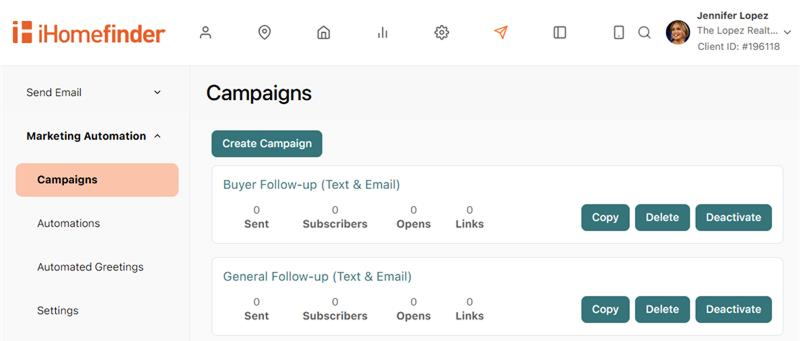
Real estate marketing automation platforms like iHomefinder bring your website, CRM, lead nurturing, and marketing tools together. But when you’re growing a team or running an independent brokerage, you need more than a fancy set of features. You need tools that make sense for the way your team works.
From distributing new leads to creating locally relevant marketing content, here’s what to look for as you compare your options.
Evaluate how the platform fits your real estate business
Start by thinking about how your team currently captures leads, manages client relationships, and markets its services. Where do your agents spend the most time? Which tasks require manual work? And what information do you struggle to keep track of?
The answers to these questions can help you narrow down your options.
Look for integrated IDX, customer relationship management (CRM), and marketing tools
Think about what happens when a prospective buyer visits your real estate website and registers to save a property.
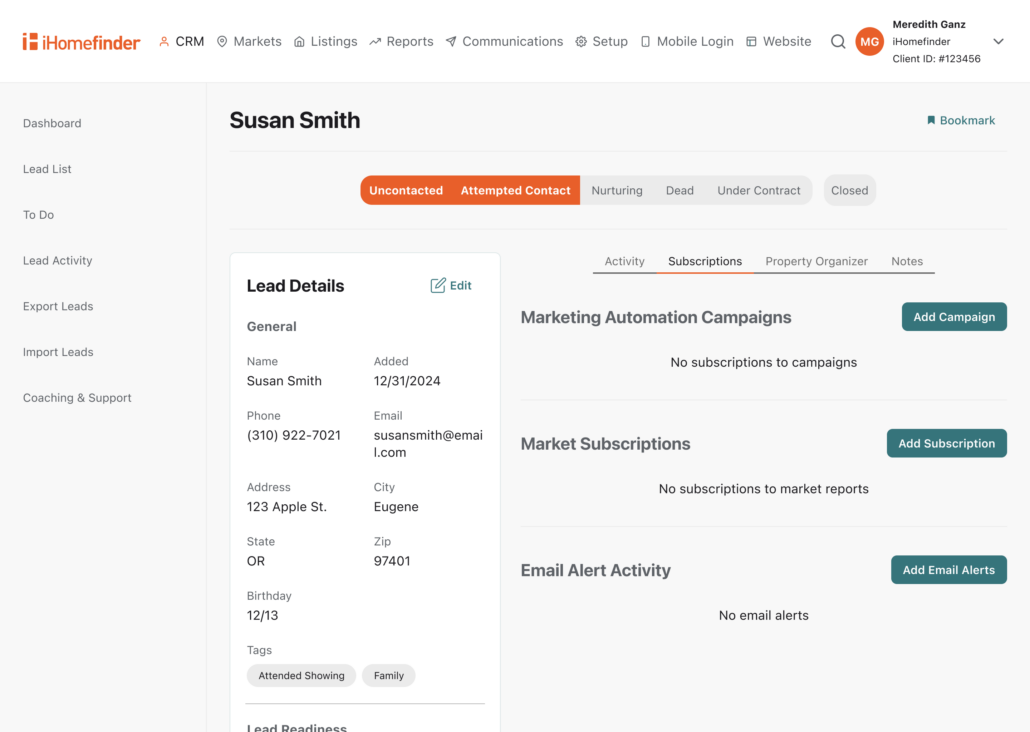
Ideally, their contact information and property search activity appear in your CRM, they begin receiving relevant listing updates, and their assigned agent has enough information to start a conversation.
When your IDX website, CRM, and marketing automation tools work together, you can manage more of that process without transferring information between systems.
As you compare platforms, look for the following capabilities:
- IDX websites: Give buyers access to MLS listings while capturing leads and tracking property search activity.
- Real estate CRM: Organize contacts, communication histories, and follow-up tasks.
- Marketing automation: Use real estate marketing tools to send relevant emails, listing alerts, and market updates to your database.
- Team management: Distribute leads and monitor agent activity.
- AI content tools: Create marketing materials that reflect your local market knowledge and professional expertise.
Always ask a provider to walk you through the entire lead journey. Pay attention to how information moves between tools and which steps require additional software or manual work.
Compare real estate marketing automation platforms
Several real estate marketing automation platforms offer integrated CRM, lead nurturing, and marketing capabilities in one comprehensive solution. However, each takes a slightly different approach to helping agents, teams, and brokerages manage their businesses.
Use the table below as a starting point for your search:
| Platform | Platform focus | Marketing automation capabilities |
| iHomefinder | Integrated real estate business growth, AI-powered automation features for better visibility | Automated nurturing, listing alerts, market reports, and AI content creation |
| Lofty | AI-powered real estate marketing | Automated campaigns and AI-assisted lead engagement |
| BoldTrail | Brokerage and agent operations | Behavioral marketing automation and agent management |
| CINC | Real estate lead generation | Automated lead nurturing and communication |
| Sierra Interactive | IDX websites and CRM | Automated action plans and lead follow-up |
| Real Geeks | Website-based lead generation | Drip campaigns and automated lead engagement |
| Rechat | Brokerage marketing and productivity | Branded marketing content and automated workflows |
iHomefinder
iHomefinder is a real estate growth platform that combines real estate websites, CRM functionality, marketing automation, and AI-powered content tools for agents, teams, and independent brokerages.
Agents can capture leads, monitor property search activity, and maintain ongoing communication through automated listing alerts, market reports, and nurturing campaigns. Team leaders can also manage lead distribution and monitor follow-up activity.
With its AI-powered content tools, iHomefinder helps agents turn their local market knowledge and professional expertise into marketing materials that support their online presence.
Lofty
Lofty offers real estate CRM, lead generation, and marketing automation tools. Agents can use the platform to manage contacts, set up automated email and text campaigns, and schedule social media posts. Lofty also includes AI features that support lead qualification and follow-up.

BoldTrail
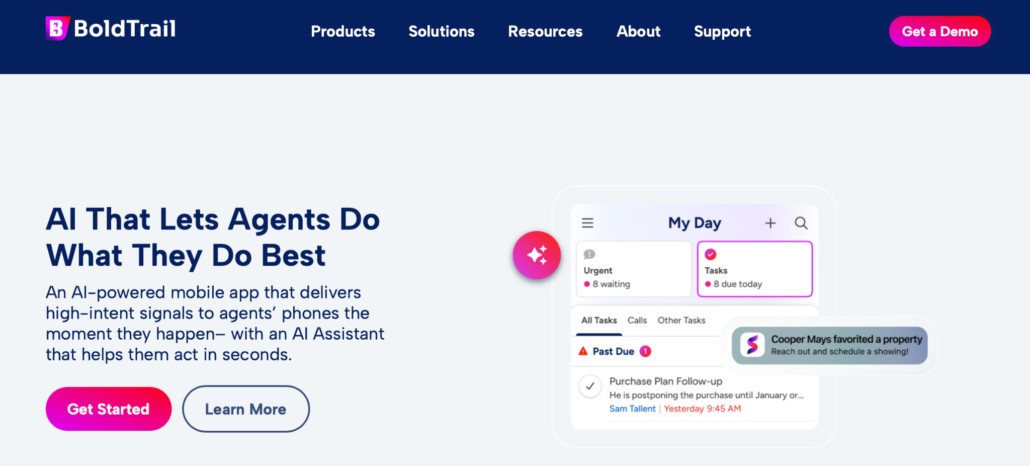
BoldTrail includes real estate CRM, IDX websites, lead generation, and marketing automation tools. Agents can set up automated email and text campaigns based on lead activity, including property searches and website visits. The platform also offers reporting tools for tracking lead sources, agent performance, and brokerage activity.
CINC
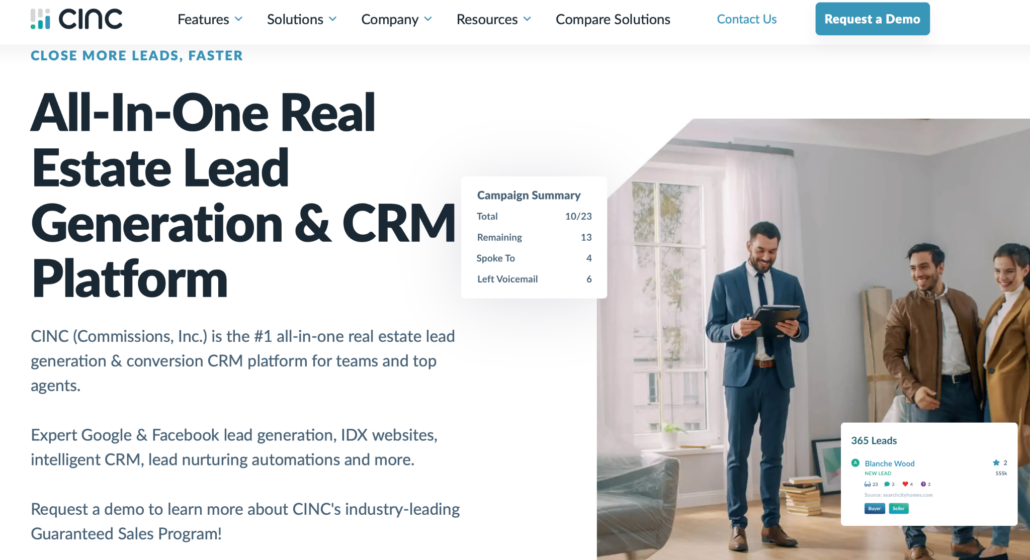
CINC focuses on real estate lead generation, particularly through paid online advertising. The platform includes IDX websites, CRM, and automated follow-up tools that help agents manage incoming inquiries and track lead activity. Teams can also use CINC to organize contacts and stay in touch with prospective buyers and sellers.
Sierra Interactive
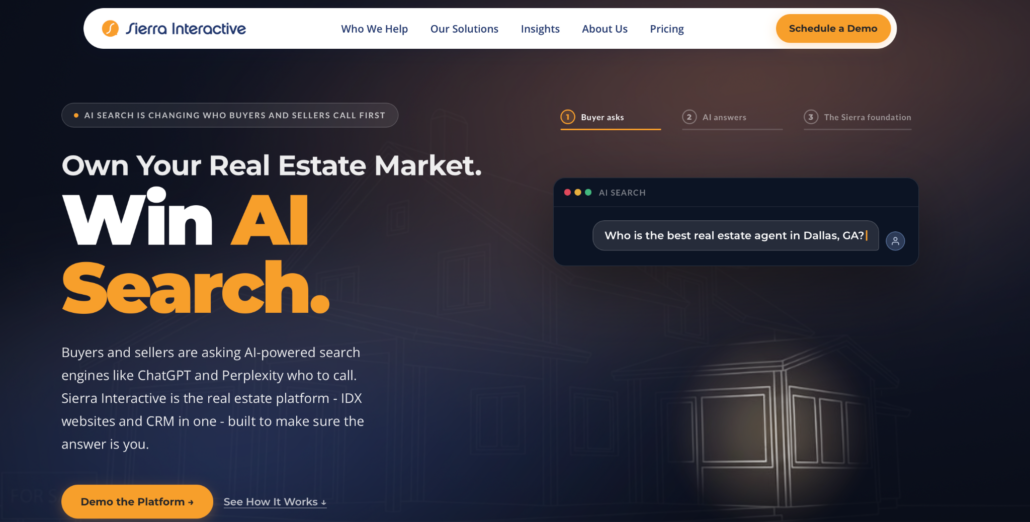
Sierra Interactive offers IDX websites and CRM tools that help real estate professionals capture and manage leads. Its marketing automation capabilities include automated action plans, email and text communication, and tools for monitoring lead activity.
Real Geeks
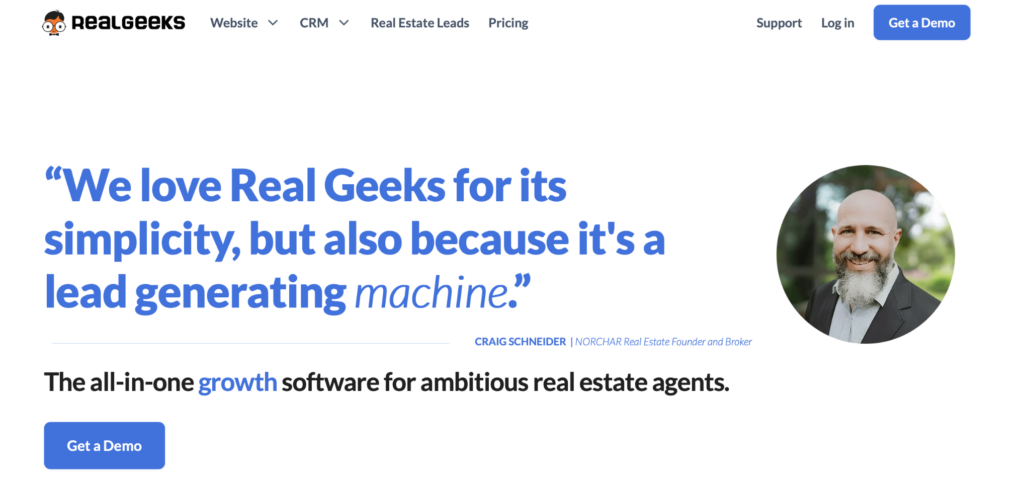
Real Geeks offers lead generation, CRM, and marketing automation tools for real estate agents and teams. Its automated drip campaigns and property alerts help agents stay in touch with buyers and sellers, while lead activity tracking provides insight into when someone may be ready for a more personal follow-up.
Rechat
Rechat brings together CRM, marketing, transaction management, and AI-powered productivity tools. Its marketing capabilities focus on helping agents create branded materials, including emails, social media content, and property marketing assets.

Assess lead routing and agent accountability
When you’re working with a handful of agents, distributing incoming leads might be straightforward. But as your brokerage grows, it becomes more difficult to keep track of who owns each lead and whether they’ve followed up.
Speed-to-lead is critical for capturing potential buyers and sellers quickly.
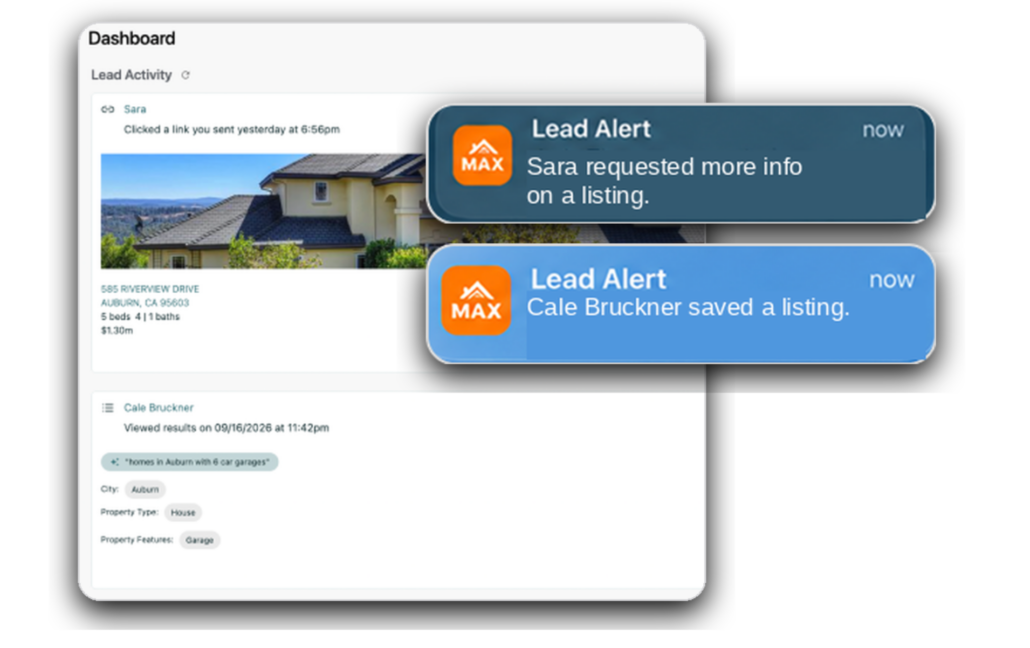
Getting a lead to the right agent is one thing. Knowing what happens next is another. Look for a platform that makes it easy to assign leads, hand them off to another agent or team member, and see who’s following up without having to chase down updates.
As you compare platforms, always ask:
- Can you automatically assign leads based on agent rotation, location, or lead source?
- What happens to a lead when an agent is out of town or unavailable?
- Can team leaders quickly spot leads that still need follow-up?
- Can agents pick up a conversation where someone else left off?
- How easy is it to see how individual agents and your team as a whole are managing their leads?
With the right information, you can identify gaps in your follow-up process and have more productive conversations with your agents about their pipelines.
Consider ease of use and scalability
You shouldn’t have to spend hours learning a new system just to find out which leads need your attention.
Ask to see what a typical workday looks like within the platform. How quickly can an agent find a contact, review recent activity, or update a marketing campaign? Can team leaders get the information they need without checking in with agents individually?
Think about where you want your business to be in a few years, too. The tools you need as a solo agent might look quite different from those you’ll need to manage a team of 20.
Here’s how your software needs might change as your business grows:
| What to look for | Solo agent | Growing team | Independent brokerage |
| Lead capture | Keep all your leads in one place | Collect leads from multiple sources | Manage incoming leads across the brokerage |
| Lead assignment | Organize and prioritize your own leads | Automatically distribute leads to agents | Customize assignment rules across teams |
| Follow-up tracking | Keep track of your daily follow-up tasks | See which agents have contacted their leads | Monitor follow-up across the brokerage |
| Marketing automation | Run your own marketing campaigns | Create and share campaigns with agents | Maintain consistent branding and messaging |
| Reporting | See how leads engage with your marketing | Track individual and team performance | Compare performance across agents and teams |
| Room for growth | Manage a growing contact database | Easily add new agents | Add teams, offices, and MLS markets as needed |
Ask providers about the cost of adding agents, accessing additional marketing features, and expanding into new markets. Find out what onboarding, training, and ongoing support they offer, too.
Follow the lead, not the feature list
When you’re comparing software, it’s easy to get caught up in which platform has the most exciting, new features. But think about how those features could help you win your next client.
Let’s say a homeowner comes across one of your blog posts about the local housing market. They’re thinking about selling but aren’t quite ready to reach out.
Here’s how your marketing tools could work together over the next few months:
- Build awareness: You use AI content tools to turn your local market expertise into a blog post and several social media updates.
- Capture interest: The homeowner visits your website and signs up to receive market updates for their area.
- Stay in touch: Automated market reports keep the homeowner informed about new listings and recent sales.
- Recognize an opportunity: The homeowner returns to your website and starts looking at properties. Their agent can see that activity in the CRM.
- Start a conversation: The agent reaches out with relevant information about buying and selling in the current market.
Each of these steps serves a different purpose. But together, they give your agents a way to build relationships long before someone is ready to schedule an appointment.
As you evaluate real estate marketing automation platforms, consider how well they support that entire journey. You want tools that help you attract new prospects, understand their interests, and give your agents a reason to reach out.
Compare real estate lead nurturing and marketing automation workflows
Capturing a new lead is just the beginning. You also need a way to stay in touch with that person, whether they’re ready to schedule a showing tomorrow or considering a move next year.
As you compare real estate marketing automation software, take a closer look at how each platform supports ongoing communication with your database.
Evaluate automated buyer and seller follow-up
Audience segmentation is why different people in your database need different follow-up. An active buyer might want daily listing alerts that match their search criteria. A homeowner who’s thinking about selling next spring might find monthly market updates more useful.
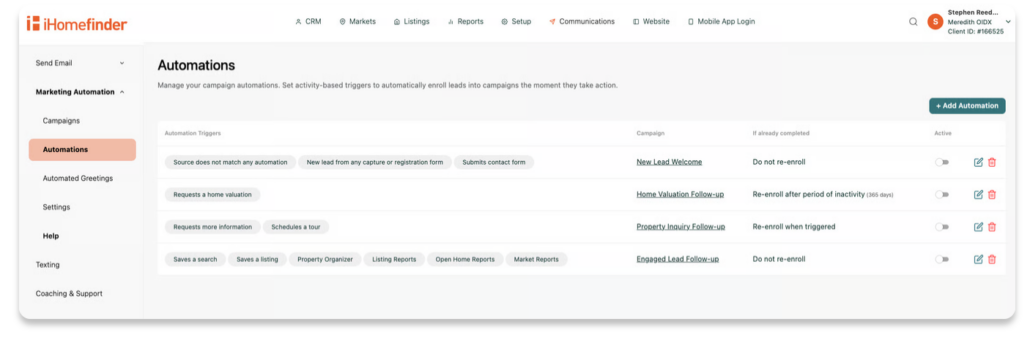
Look for a platform with ready-to-use email nurturing campaigns that agents can customize. They should also be able to send timely follow-ups and create targeted campaigns for different groups of buyers and sellers.
Consider whether you can create campaigns for new inquiries, long-term leads, prospective sellers, open house attendees, and past clients as distinct segments within your contact list.
With iHomefinder’s marketing automation tools, agents can maintain ongoing communication through automated campaigns, personalized listing alerts, and market reports.
Look for automation that responds to lead activity
A lead who hasn’t responded to your emails in six months might suddenly start looking at properties again. Would your agents know?
While time-based drip campaigns help you maintain regular contact, behavioral data can give you more insight into when someone might benefit from personal outreach, especially if the platform supports lead scoring and uses predictive analytics to highlight stronger intent signals.
When comparing platforms, find out whether agents can monitor activities such as:
- Returning to your IDX or real estate website
- Viewing or saving properties
- Opening or clicking marketing emails
- Updating property search preferences
- Submitting new property inquiries
Some platforms use AI to spot patterns in lead activity and help agents identify contacts who may be ready to reconnect.
Find out what happens when the platform picks up on these signals. Will it notify the assigned agent when a lead starts browsing properties again? Can the agent see what they’ve been looking at alongside their previous conversations?
Knowing what a lead has been up to gives your agents a better starting point for their next conversation instead of sending another generic check-in.
Review email and text campaign controls
Automated communication should complement your agents’ conversations, not interfere with them. Imagine an agent has just spoken with a prospective buyer who decided to put their home search on hold. You don’t want that person receiving an automated text asking whether they’re ready to schedule a showing the next morning.
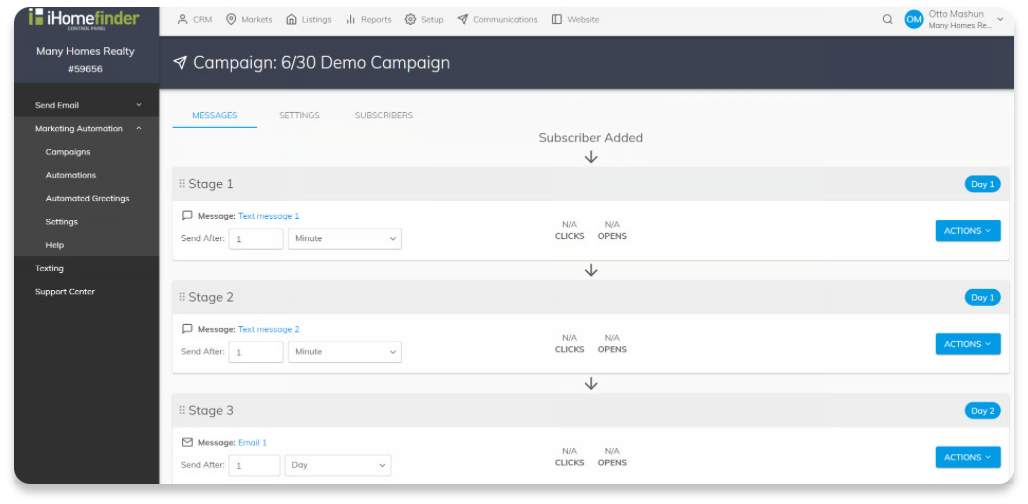
When evaluating email and text automation, look for tools that allow agents to customize campaign content, adjust delivery schedules, and pause or stop communications when necessary.
For brokerages, it’s also worth considering whether administrators can create standardized campaigns that agents can personalize. Make sure your team can manage contact preferences, review communication histories, and comply with applicable email and text messaging requirements.
Don’t automate the relationship
A well-timed email or market update can keep you on someone’s radar. But it’s the conversations you have with buyers and sellers that build relationships.
The value of marketing automation isn’t just in knowing what to send. It’s also in knowing when to pick up the phone.
Look for a platform that helps your agents recognize those moments. A lead who starts saving properties again, a past client who regularly opens market reports, or a buyer who returns to your website after months of inactivity might be worth a personal check-in.
With iHomefinder, agents can track lead engagement and property search activity to help determine who needs their attention and what to talk about when they reach out.
Let automation handle the routine touchpoints so your agents have more time for the conversations that matter.
Check for automated social media marketing
Between showings, client meetings, and lead follow-up, it’s easy for social media scheduling to fall to the bottom of an agent’s to-do list.
Some real estate marketing automation platforms help agents create, schedule, and publish social media content. Agents can use these tools to share new listings, post market updates, and answer common buyer and seller questions.
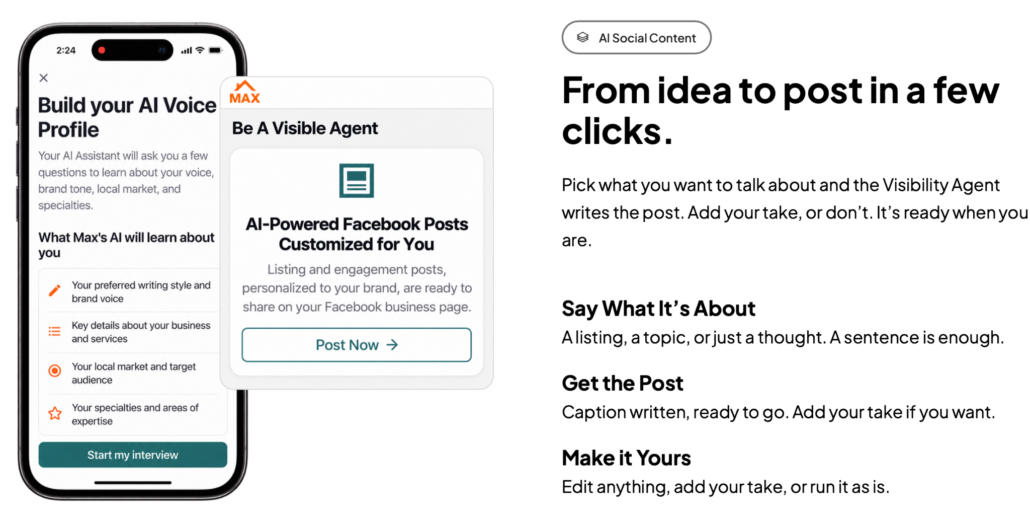
Some platforms also help agents create branded listing graphics and videos. This gives agents more ways to showcase properties without designing every post from scratch.
Keep in mind that creating content and publishing it are two different things. A platform that writes social media captions might still require agents to schedule and publish their own posts.
As you compare platforms, ask:
- Which social media networks does the platform support?
- Can agents edit and approve posts before they go live?
- Does automated posting require an additional subscription?
- Can agents see which posts get the most engagement and when their audience is most active?
Look for tools that fit your team’s social media strategy and make it easier for agents to post consistently.
Determine how you’ll measure marketing automation performance
Just because you’re using marketing automation doesn’t mean your marketing is working.
You need to understand how the software supports your team’s activities, where it helps address existing gaps, and whether reporting includes robust analytics and advanced analytics for smarter decisions.
Before implementing a new platform, establish a baseline for metrics such as campaign performance, including:
- Average lead response time
- Percentage of new leads contacted
- Email engagement rates
- Number of inactive leads reengaged
- Appointments booked
- Lead-to-client conversion rates
Review these metrics regularly after your team begins using the software. If agents are contacting more leads but booking fewer appointments, for instance, you might need to revisit your messaging or follow-up strategy. The right reporting should also deliver actionable insights that improve marketing efficiency over time.
Explore AI content creation and market reporting tools
Between listing appointments, showings, and client meetings, finding time to write a blog post or put together a newsletter isn’t always easy.
AI-powered content tools can help agents keep up with these tasks. But as you compare real estate marketing automation platforms, look beyond how quickly a tool can generate real estate industry content. Consider the accuracy of its output, how it reflects your expertise, and how easily it fits into your marketing routine.
Evaluate AI content generation capabilities
Start by identifying which marketing activities take up the most time in your business. Real estate agents can use AI to assist with plenty of content creation tasks, including:
- Writing blog posts that answer common buyer and seller questions
- Drafting property descriptions that highlight listing features
- Creating social media posts
- Putting together email newsletters
- Developing local market updates
- Creating marketing collateral for property listings, such as flyers and listing presentations
General-purpose AI tools can help agents create marketing content, but real estate-specific tools offer additional advantages. Some can pull in local market data and property information to create more relevant blog posts, social media updates, and marketing materials.
For example, iHomefinder’s Visibility Agent combines local market information with your professional insights to create marketing content that reflects your expertise.
Rather than starting with a blank document, you can share your perspective on what’s happening in your market and use AI to help turn those insights into blog posts, emails, and social media content.
Compare automated market reporting capabilities
Regular market updates give agents a reason to stay in touch with their contacts, even when those individuals aren’t actively buying or selling.
Look for a platform that can generate and distribute market reports using current MLS data. Depending on the provider, these reports may include new listings, recent sales, price changes, and local housing inventory.
With iHomefinder’s automated market reports, agents can keep buyers, sellers, and past clients informed about the areas they’re interested in without manually compiling and sending updates.
When comparing providers, check how frequently reports update, whether you can customize geographic areas, and how much control you have over delivery schedules.
Verify data accuracy and CRM integration
Before relying on AI-generated real estate content, find out where the platform gets its information. Does it pull from current MLS data? Can agents provide their own market statistics, property details, and professional insights?
Consider how the content tools connect with the rest of the platform, too.
If an agent creates an email newsletter, can they send it to a segmented contact list through the CRM? If they generate a blog post, can they publish it to their real estate website?
Big picture: Look at how these tools work together. Can agents create, share, and track marketing content without switching between platforms? The easier it is to manage everything in one place, the less time your team spends on manual tasks.
Review content editing, approval, and publishing controls
AI can help you create marketing materials and marketing collateral, but your expertise is what makes that content most valuable to buyers and sellers.
Choose a platform that gives you control over what you publish while supporting consistent publishing and allowing agents to personalize and verify content:
- Edit AI-generated drafts to reflect their voice and expertise
- Verify property details and market statistics
- Maintain consistent branding across marketing channels
- Review content for Fair Housing compliance
- Manage publishing permissions across the team
If you run a brokerage, consider establishing guidelines for AI-generated marketing materials.
Use clear project management workflows when approvals and publishing responsibilities are assigned across team members, and make sure agents understand which information they need to verify and what standards their content should meet before publishing.
Make room for more growth with iHomefinder
As your real estate business grows, having a website, CRM, and marketing tools that work together makes it easier to manage the day-to-day activities that support that growth.
With iHomefinder, you can capture new leads, nurture relationships, manage your team’s follow-up, and create locally relevant marketing content from one connected platform.
Whether you’re building your team or expanding your independent brokerage, iHomefinder gives you the tools to support your agents and stay connected with your clients.
Schedule a demo to see how iHomefinder can support your real estate growth strategy.
Real estate marketing automation FAQs
How can real estate agents use marketing automation to generate leads?
Real estate agents can use marketing automation to capture leads through IDX websites, dedicated landing pages, and online registration forms.
Once someone shares their contact information, agents can set up automated listing alerts, email campaigns, and market updates to keep the conversation going. Connecting these tools to a real estate CRM also helps agents keep track of where leads come from and which marketing efforts bring people to their websites.
How does marketing automation support a growing real estate sales team?
Marketing automation helps a real estate sales team manage incoming leads, coordinate follow-up, and maintain consistent communication with buyers and sellers.
Team leaders can use automated lead routing to distribute new inquiries and monitor whether agents have followed up. Instead of checking in with each agent individually, they can review contact histories and team activity to see where agents might need additional support.
What role does mobile marketing play in real estate automation?
Mobile marketing helps agents reach buyers and sellers through the devices they use every day. This can include automated text messages, mobile-friendly property alerts, and emails that are easy to read on a phone.
When comparing platforms, look for responsive IDX websites, mobile CRM access, and communication tools that allow agents to manage leads and respond to inquiries while they’re away from the office.
Can real estate marketing automation tools help promote property listings?
Yes. Depending on the platform, agents can use marketing automation to share new listings through email campaigns, social media posts, and property alerts.
Some tools also help agents create listing-specific landing pages or marketing materials that feature property photos, videos, and virtual tours. Look for a platform that makes it easy to share property information across multiple channels without having to recreate the same content for each one.
How can real estate agents optimize their marketing efforts with automation?
Real estate agents can optimize their marketing efforts by tracking how contacts respond to different campaigns. Pay attention to which emails people open, which listings they view, and which marketing channels bring in new inquiries.
Use that information to adjust your messaging, campaign frequency, and follow-up strategy. A platform that connects marketing activity with CRM data can help you make these decisions without pulling reports from several different tools.