

Managing a growing real estate team brings a unique set of challenges. You generate more leads, manage multiple agents, and oversee a complex pipeline that requires constant attention. Tools designed for solo agents quickly buckle under the pressure of team dynamics, resulting in lost opportunities and disorganized communication.
A real estate CRM serves as a central hub for real estate agents, consolidating client information, essential tools, and communication channels into one integrated platform to streamline your business.
Finding a platform that aligns with your operational goals is essential for sustained growth. This guide covers exactly what makes a platform suitable for group collaboration, highlights the top options available, and helps you identify the best real estate CRM for teams based on your specific needs. We focus on real estate software built specifically for real estate agents and their workflows, ensuring seamless integration with the tools your team already uses.
Quick Comparison: Best Real Estate CRM for Teams in 2026
| CRM | Best For | Key Strength | Considerations |
|---|---|---|---|
| iHomefinder | Teams focused on organic, IDX-driven lead generation | Indexable IDX listings + direct website behavior tracking tied to CRM | Works best within WordPress |
| Follow Up Boss | High-volume teams prioritizing speed-to-lead and conversion | Industry-leading lead routing, integrations, and follow-up automation | No native IDX or website; requires additional tools for full marketing stack |
| BoldTrail | Teams needing built-in IDX websites + all-in-one system | Integrated IDX websites, lead capture, and behavioral tracking across 600+ MLS | Can require onboarding time; full value depends on proper setup |
| Real Geeks | Growing teams wanting affordable all-in-one lead generation + CRM | Strong website + CRM pairing with built-in lead capture and follow-up tools | Limited customization and advanced automation compared to premium platforms |
| BoomTown | Teams investing heavily in paid lead generation and scaling | Full funnel platform with lead gen, CRM, marketing automation, and analytics | High cost and complexity; best suited for established teams with budget |
Top Real Estate CRMs for Teams in 2026
Here’s a closer look at the platforms leading the market, including how they support team workflows, lead management, and scalability.
iHomefinder
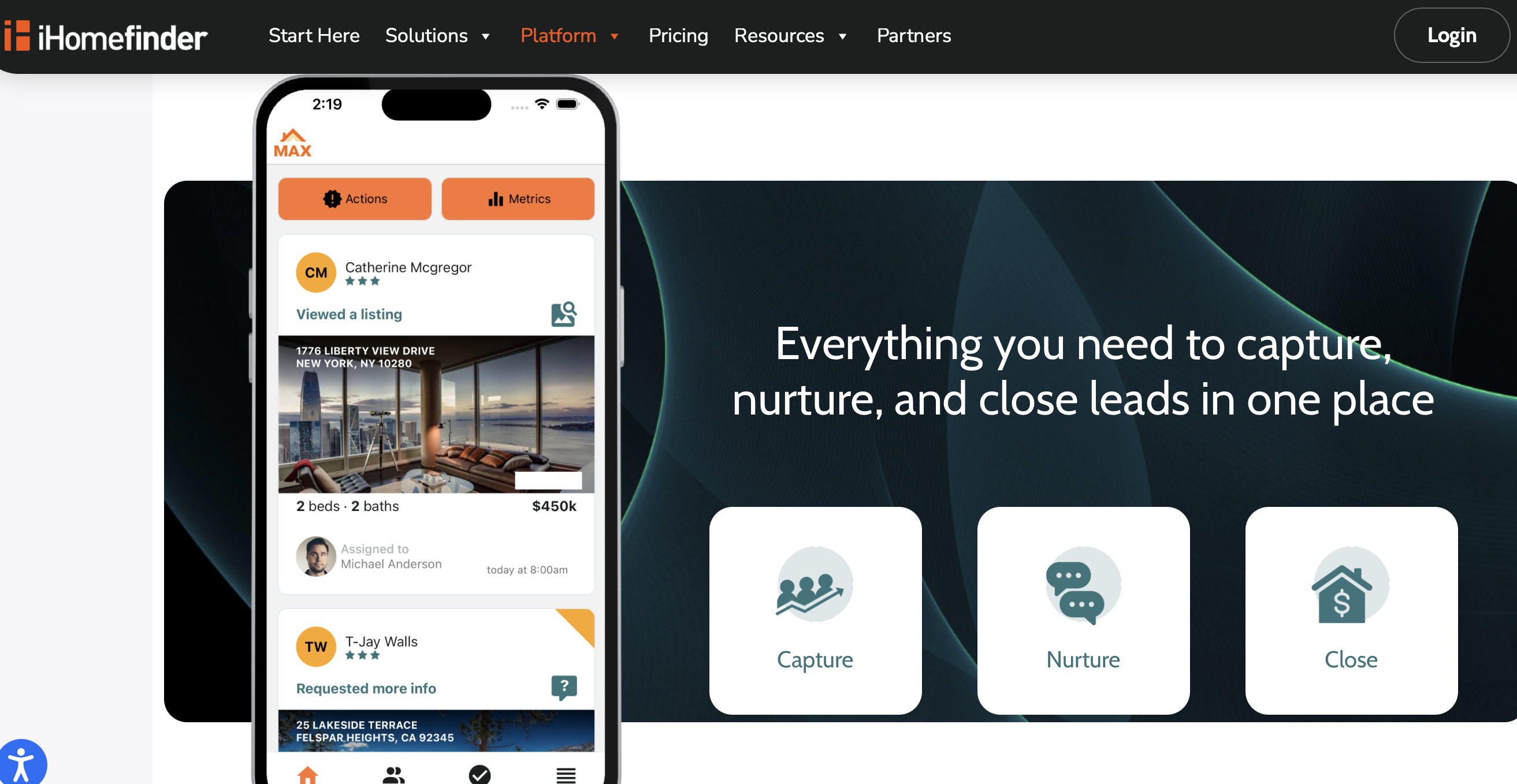
iHomefinder is the strongest fit for agents and teams that rely heavily on their website and IDX-driven lead generation. Its biggest advantage is offering indexable IDX listings, which can improve organic search visibility compared to iframe-based solutions.
The platform combines website, IDX, and CRM functionality into one system, making it easier to manage leads without stitching together multiple tools. Teams can track visitor behavior, see which listings prospects engage with, and trigger automated follow-ups like saved searches and listing alerts.
This tight connection between website activity and CRM data makes iHomefinder especially effective for teams that want marketing and sales working from the same system. It works best for teams already using—or willing to use—WordPress.
Follow Up Boss
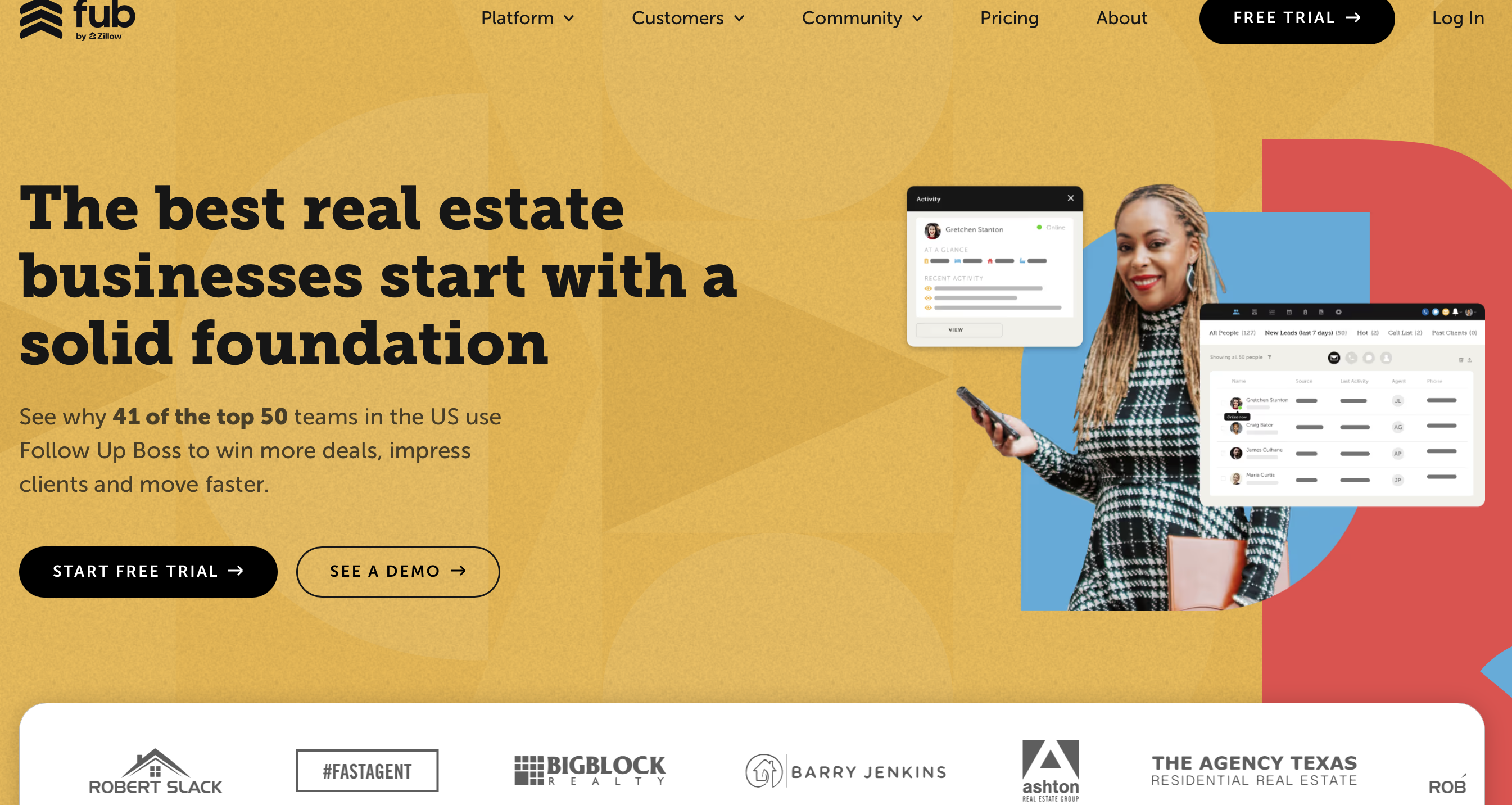
Follow Up Boss is built for speed, simplicity, and high-volume lead management. It’s known for fast lead routing, clean usability, and strong integrations with lead sources like Zillow, Realtor.com, and Facebook Ads.
Follow Up Boss focuses on being a best-in-class CRM rather than a full marketing suite. It does not offer native IDX websites, which means most teams pair it with a separate website or lead generation tool.
It can be a good choice for teams that already have marketing dialed in and need a reliable system to respond quickly and convert leads efficiently.
BoldTrail
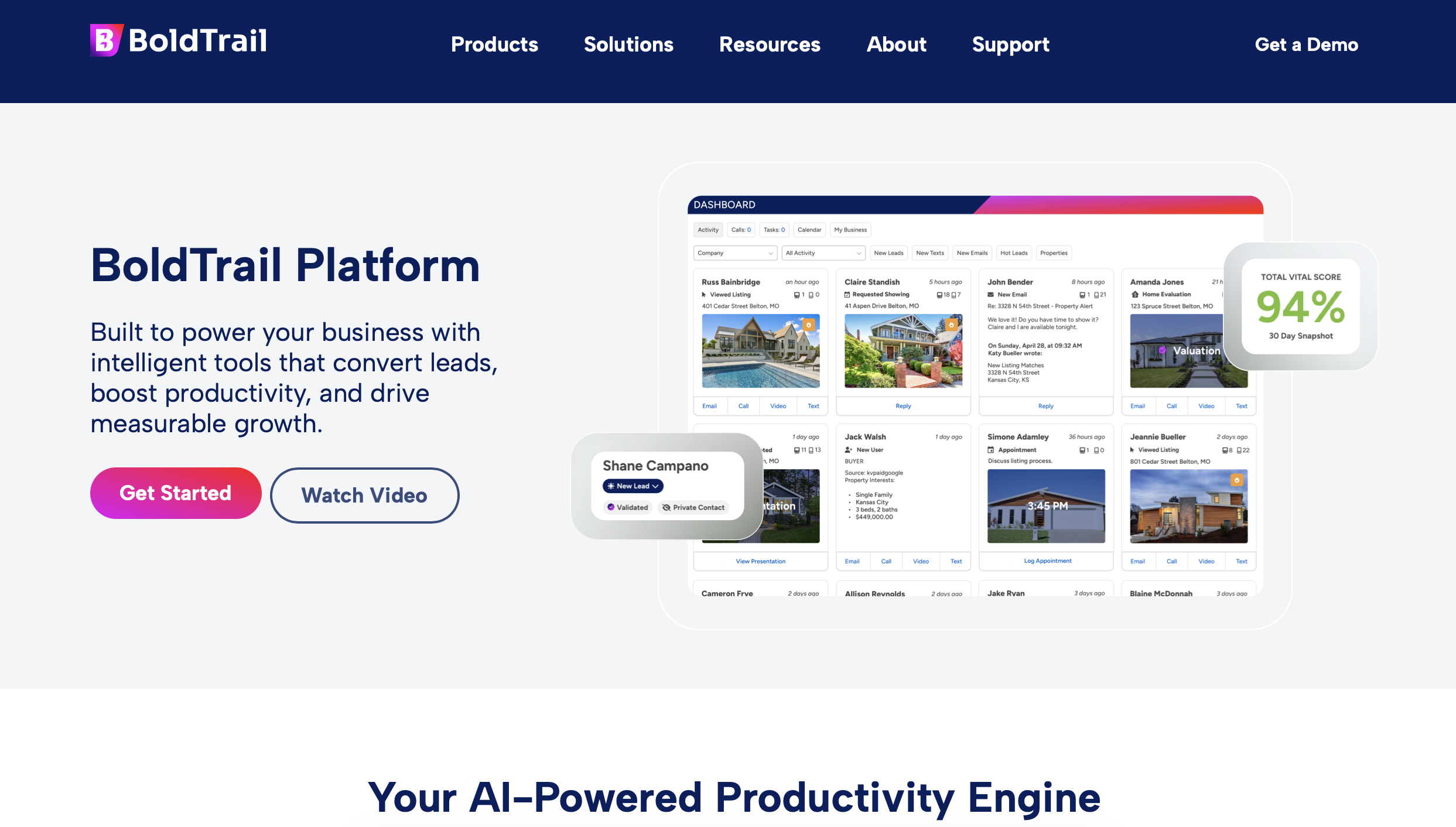
BoldTrail (formerly part of the kvCORE ecosystem under Inside Real Estate) is an all-in-one platform designed for teams and brokerages that want CRM, IDX websites, and marketing automation in a single system.
It includes tools for lead generation, behavioral tracking, and automated follow-up, along with team management features like lead distribution and performance reporting. The platform is built to support scaling teams that need structure and visibility across agents.
Because of its breadth, BoldTrail can take time to fully implement and optimize. Smaller teams may not use every feature, but larger or fast-growing teams often benefit from having everything centralized.
Real Geeks
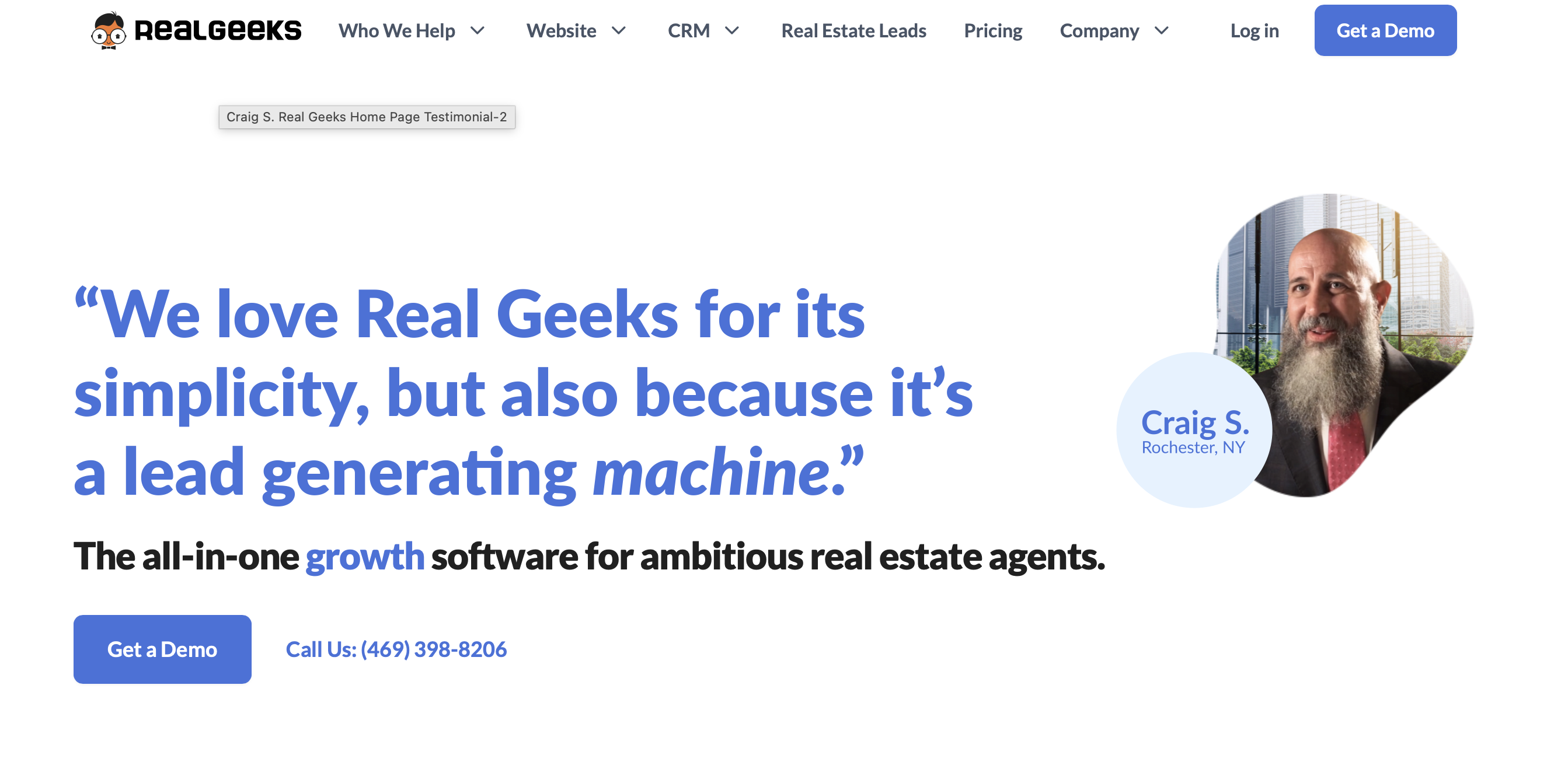
Real Geeks offers a straightforward website and CRM combination at a more accessible price point. It covers the essentials well, including lead capture forms, basic follow-up automation, and simple CRM organization tools.
It’s often a good entry point for growing teams that want an all-in-one solution without a large upfront investment.
The tradeoff is flexibility. Compared to higher-end platforms, Real Geeks offers fewer customization options and less advanced automation.
BoomTown
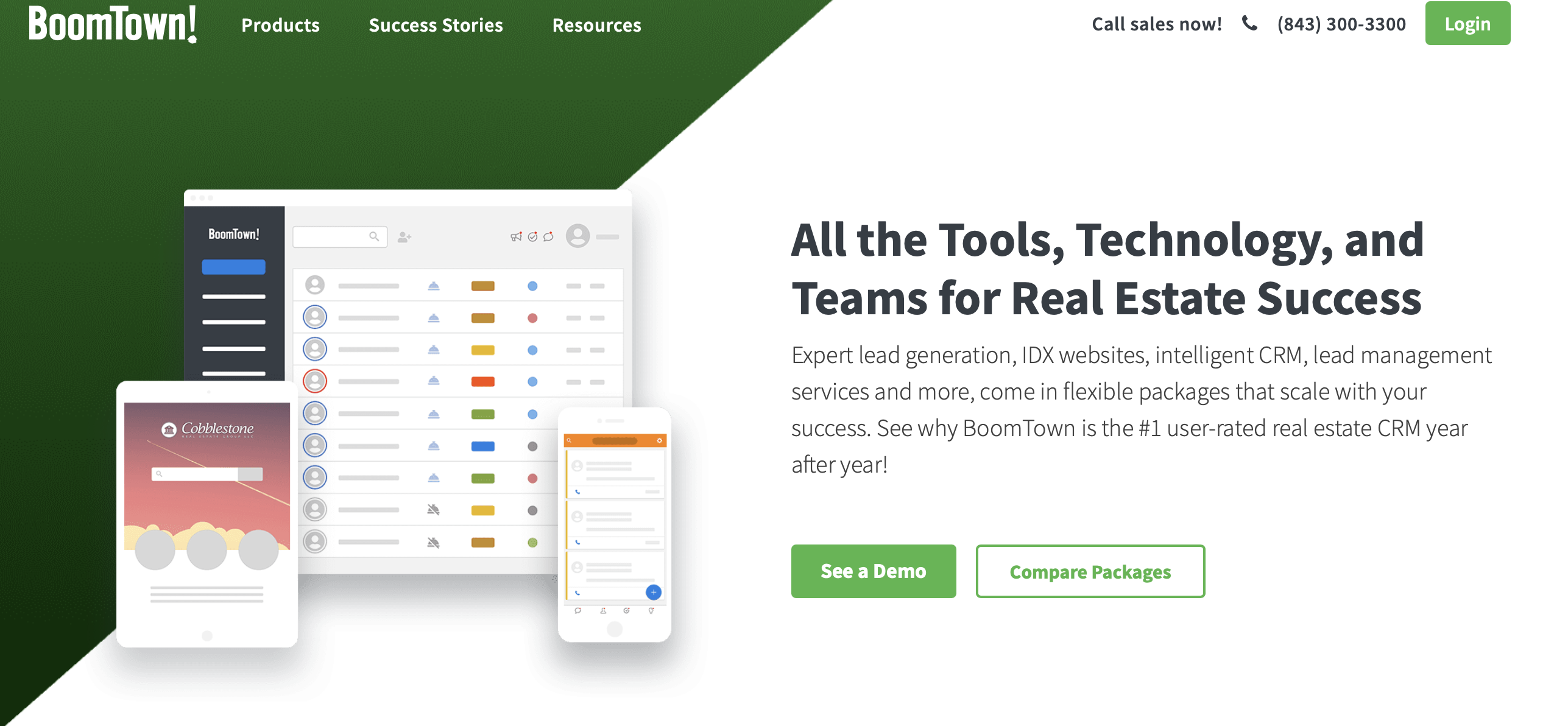
BoomTown is designed for teams that prioritize paid lead generation and growth. It combines CRM, marketing automation, and lead generation services into one platform, often including managed advertising campaigns.
Teams benefit from strong lead tracking, conversion tools, and performance reporting that ties activity back to ROI.
Because of its bundled approach and pricing, BoomTown is best suited for teams with established budgets who are ready to invest heavily in scaling their pipeline.
What to look for in the best real estate CRM for teams
Evaluating software requires looking past shiny interfaces to understand how the key features will support your daily operations and address team-specific pain points. Here are the five key elements your team needs, including easy access to comprehensive property details for effective client interactions and lead nurturing.
1. Lead Routing and Distribution
When a new lead enters your system, capturing and routing new leads quickly to the right agent is crucial for maximizing engagement and conversion. Look for platforms offering round-robin, priority-based, and territory routing. Speed-to-lead automation directly impacts your conversion rates. The faster an agent claims and contacts a new prospect, the higher the chance of closing the deal.
2. Built-in Automation and Workflows
Your agents should focus on building relationships, not doing data entry. A strong team CRM provides drip campaigns and behavior-based triggers, and can automate buyer nurture by sending prebuilt drip sequences and personalized communication to keep potential homebuyers engaged throughout the sales funnel. Automated task reminders and follow-ups keep agents on track. Reducing repetitive administrative tasks allows your team to spend more time actively selling.
3. IDX + CRM Integration
Disconnected systems kill conversions. If your website and your CRM do not communicate flawlessly, your agents fly blind. MLS integration is crucial for automatically accessing and updating property data within the CRM, ensuring agents always have the latest listings, price changes, and status updates at their fingertips.
Unified systems like iHomefinder provide a massive advantage. They track property search behavior, trigger alerts based on specific listings viewed, and automatically prioritize hot leads based on their activity on your website.
4. Team visibility and reporting
You cannot manage what you cannot measure. Team leaders need pipeline tracking across all agents to project revenue accurately. Manager dashboards should display conversion metrics and foster accountability, showing exactly which agents are working their leads effectively and who needs additional coaching.
Tracking client behavior—such as engagement with property emails or interactions with listings—can further enhance reporting by revealing which agents are successfully nurturing leads and where follow-up strategies may need adjustment.
5. Scalability for Growing Teams
Your software should grow with you. The platform must make adding new agents, assigning specialized roles, and restricting permissions effortless. Whether you are managing a small boutique group or expanding into a large independent brokerage, the underlying architecture must support your trajectory.
Getting Your Team Started with a New CRM
Implementing a new real estate CRM software can feel overwhelming, especially for small teams or solo agents transitioning from manual processes or outdated systems. However, a structured onboarding approach can make the process efficient and set your real estate business up for long-term success.
Identify Your Team’s Specific Needs and Pain Points
Consider where your current workflow breaks down—whether it’s lead capture, lead routing, transaction management, or client communication. This clarity will help you select the best real estate CRM that addresses your unique challenges and supports your business model.
Evaluate Ease of Use
Look for a real estate CRM with an intuitive user interface and straightforward navigation. Platforms like Wise Agent and Follow Up Boss are known for their easy-to-use platforms and offer one-on-one onboarding to help real estate professionals get up to speed quickly. Comprehensive onboarding and training resources are essential for ensuring your team adopts the new system and uses it effectively.
Set up your CRM for Success from Day One
Configure lead capture forms, automate drip campaigns, and integrate with key tools such as MLS and IDX websites. Many of the best CRM software options, including Wise Agent, provide pre-built templates, marketing automation, and transaction checklists to streamline setup. Proper configuration ensures that incoming leads are routed to the right agents, follow-up tracking is automated, and all client communication is centralized.
Plan to Train as an Ongoing Process
Schedule regular training sessions to help your team master features like lead tracking, automated property alerts, and deal tracking. Encourage agents to use mobile phone apps for on-the-go access and to stay organized with task reminders and communication tracking. Ongoing support from your CRM provider can help address new pain points as your team grows and your lead volume increases.
How to Choose the Best CRM for Your Team
Selecting the right software requires asking targeted questions about your specific operations. Use this checklist to guide your decision:
- How are your leads currently generated (IDX, paid ads, referrals)?
- Do you need built-in lead routing, or do you prefer using external tools?
- How important is deep automation versus manual agent control?
- Do you need IDX integrated directly into your CRM environment?
- What level of reporting and oversight does your leadership team need?
- How does the CRM help you segment and nurture past clients for referrals and repeat business?
Why IDX + CRM alignment is the biggest competitive advantage
Most teams treat their website and their CRM as completely separate tools. This disconnect creates delayed follow-up and causes agents to miss vital intent signals. If a lead views a specific luxury property five times in one hour, your agent needs to know instantly.
Platforms like iHomefinder solve this data gap. By connecting property searches directly to your follow-up workflows, the system automatically prioritizes high-intent leads. Agents reach out with relevant information exactly when the prospect is most engaged.
Choosing the CRM System that Fits Your Flow
The ideal CRM depends entirely on your lead sources, team size, and long-term growth goals. The software you pick should eliminate friction from your sales process and give your agents the context they need to close deals.
For teams focused on converting website traffic into clients, platforms that integrate search behavior with contact management offer a massive operational advantage. If your team wants to capture, track, and convert leads directly from your website, start with a platform designed to connect IDX search behavior with powerful CRM automation.
👉 Explore iHomefinder today to see how it works in practice.
FAQ: Best Real Estate CRM for Teams
What is the best real estate CRM for teams?
The best CRM combines lead routing, automated follow-up, and IDX integration to help teams respond faster and convert more leads effectively.
Do real estate teams need IDX in their CRM?
Yes, especially if your website acts as a primary lead source. IDX integration allows you to track visitor behavior and trigger automated, highly relevant follow-up communications.
What CRM do most real estate teams use?
Popular options vary based on business models. iHomefinder, Follow Up Boss, and Boomtown are widely used. Choice depends on factors like team size, technical requirements, and lead generation strategies.
How much does a real estate CRM for teams cost?
Pricing typically ranges from $50 to over $500 per user per month, depending on the platform’s feature set, scale, and included marketing services.