

IDX leads are high-volume, top-of-funnel, and time-sensitive. They can come in 24/7, often with limited information, and they expect fast follow-up.
Brokers and industry professionals know this is where many teams lose deals—not because the market is slow, but because their systems can’t keep up.
For growing teams, the challenge goes beyond lead capture. You’re dealing with agent assignment, response time, accountability, and consistency at scale. Without the right CRM, even teams with deep expertise struggle to turn IDX traffic into real conversations. Missed routing rules, delayed texts, or duplicate records quietly drain marketing budgets.
This guide breaks down the best real estate CRMs built for teams dealing with IDX lead flow. We focus on what matters: speed, automation, visibility, and fit.
Quick Answer: What is the Best CRM for Real Estate Agents?
The best CRM for IDX leads captures registrations automatically, removes duplicates, routes leads correctly, and triggers fast follow-up across text, email, and calls. Speed and reliability matter more than trendy feature lists.
There’s no one-size-fits-all CRM. Some tools focus on speed-to-lead, while others bundle CRM, marketing, and websites into an all-in-one platform.
>> iHomefinder stands out by giving teams powerful IDX lead capture with a powerful, centralized CRM—making it easier to choose the system that actually fits how your team works.
See the comparison table below for a side-by-side breakdown.
Comparison Snapshot
The following table highlights how different platforms stack up regarding team-specific needs.
| Best for | Platform | Automation | IDX integration strength | Reporting |
|---|---|---|---|---|
| IDX and Lead Gen Engine, Easy to Use Platform | iHomefinder | Behavioral triggers | High (Native) | Activity Insights |
| Speed, Ops | Follow Up Boss | Advanced | High | Excellent |
| All-in-One | BoldTrail | Native/Built-in | High (Built-in) | Good |
| Accountability | BoomTown | Managed/Built-in | High (Built-in) | Excellent |
| Simplicity | Real Geeks | Basic | High (Built-in) | Basic |
| SEO Ecosystem | Sierra Interactive | Good | High (Built-in) | Good |
| Database Management | Top Producer | Basic | Varies | Good |
| General Use | Wise Agent | Basic | Varies | Basic |
| Customization | HubSpot | Advanced | Needs Config | Excellent |
The Best Real Estate CRMs for Teams Using IDX
1. iHomefinder (IDX platform + CRM Integrations for Teams)
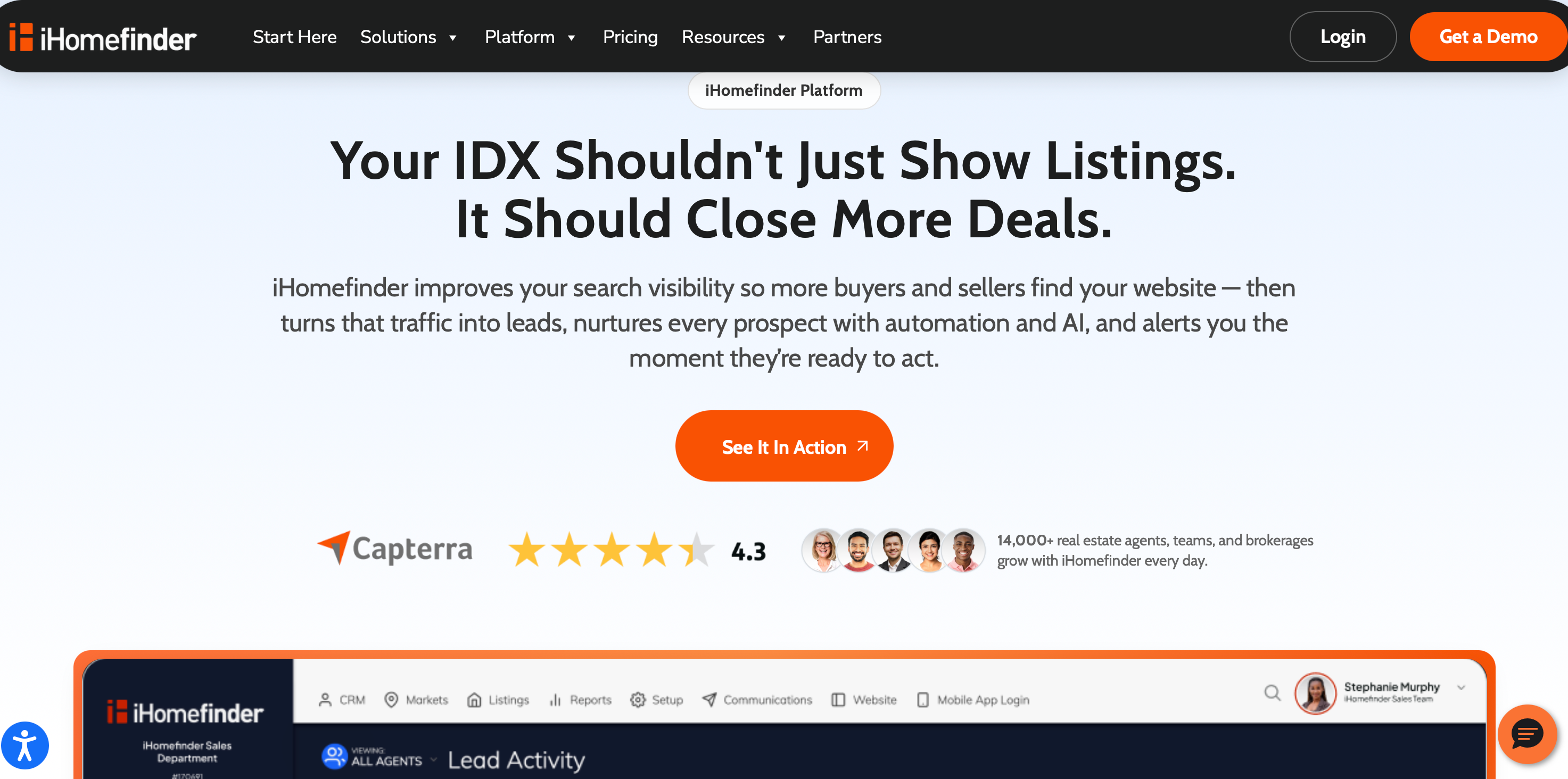
Homefinder is the “IDX engine” that powers lead generation for your real estate business. For teams that want to use a specific CRM but need better data to feed into it, iHomefinder is the solution to keep leads coming. It captures leads, tracks behavior, and routes rich data into the systems you already run.
Key features
- Behavioral tracking: It tracks favorites, saved searches, and repeat views, passing this intelligence to your team so they know why they’re connecting.
- Strong integration posture: Specifically designed to feed leads cleanly, supporting complex team workflows without extra manual lift.
- Team-friendly site features: Supports multiple agents and teams, allowing for scalable lead generation.
Best for
Teams that already have (or want) a dedicated, best-of-breed CRM but need a superior IDX capture layer. It is ideal for those tired of generic “new lead” notifications and who want actionable behavioral data.
2. Follow Up Boss
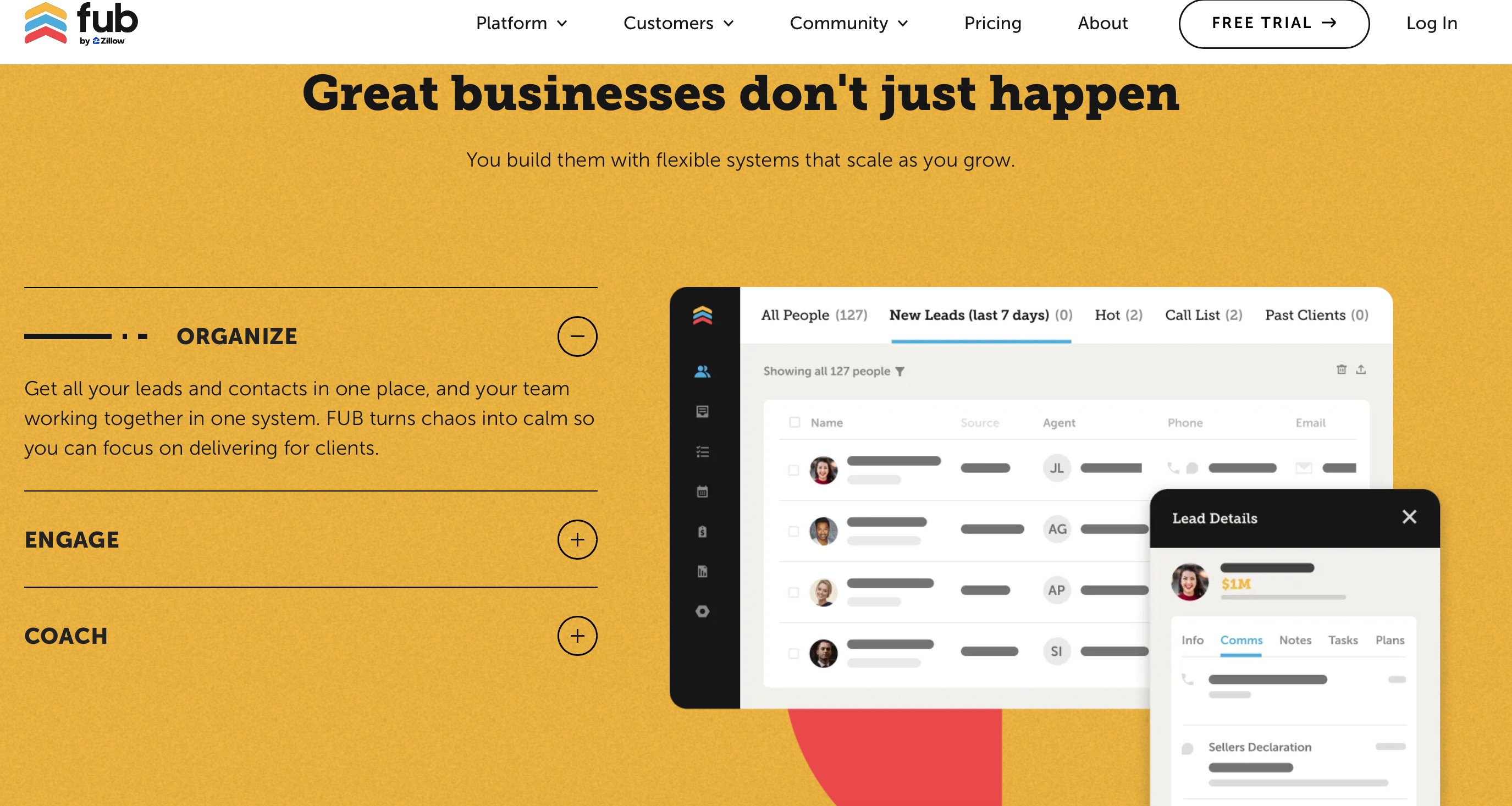
Follow Up Boss is for real estate teams that prioritize operations, fast lead response, clear routing rules, and day-to-day pipeline management.
Key features
- Team lead distribution: Offers highly customizable round-robin and rules-based routing.
- Activity tracking: Automatically logs calls, texts, and emails, providing total transparency for team leaders.
- Open API: Integrates with almost every lead source and real estate tool on the market.
Any tradeoffs
It is not an all-in-one suite. You must bring your own website and IDX (which is why it pairs well with iHomefinder). Marketing automation for things like newsletters often requires external tools.
Best for
Teams prioritizing speed-to-lead, routing, and manager visibility.
3. BoldTrail
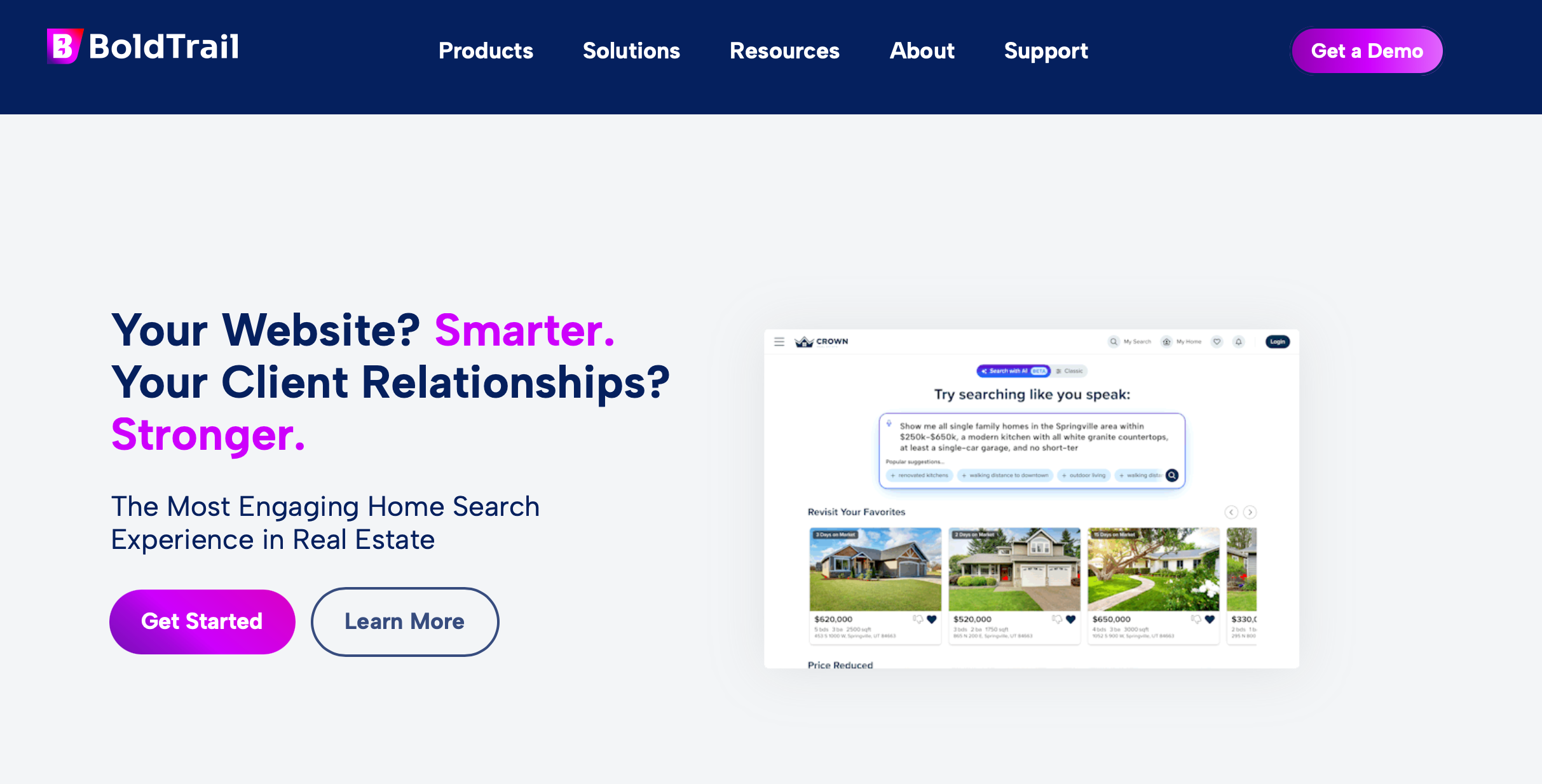
BoldTrail is an all-in-one platform often provided by large brokerages, but it is also available for independent teams. It bundles the website, CRM, and marketing automation into one ecosystem.
Key features
- Behavioral automation: The system “watches” what leads do on the site and triggers specific nurture campaigns.
- Smart CRM: Uses AI to surface leads that are likely to sell or buy based on their activity.
- Team management: robust routing and accountability tools are baked in.
Any tradeoffs
“All-in-one” means you are locked into their ecosystem. The learning curve can be steep for new agents.
Best for
Teams that want a single platform for CRM, marketing, and website and are comfortable standardizing their entire operation on one vendor.
4. BoomTown
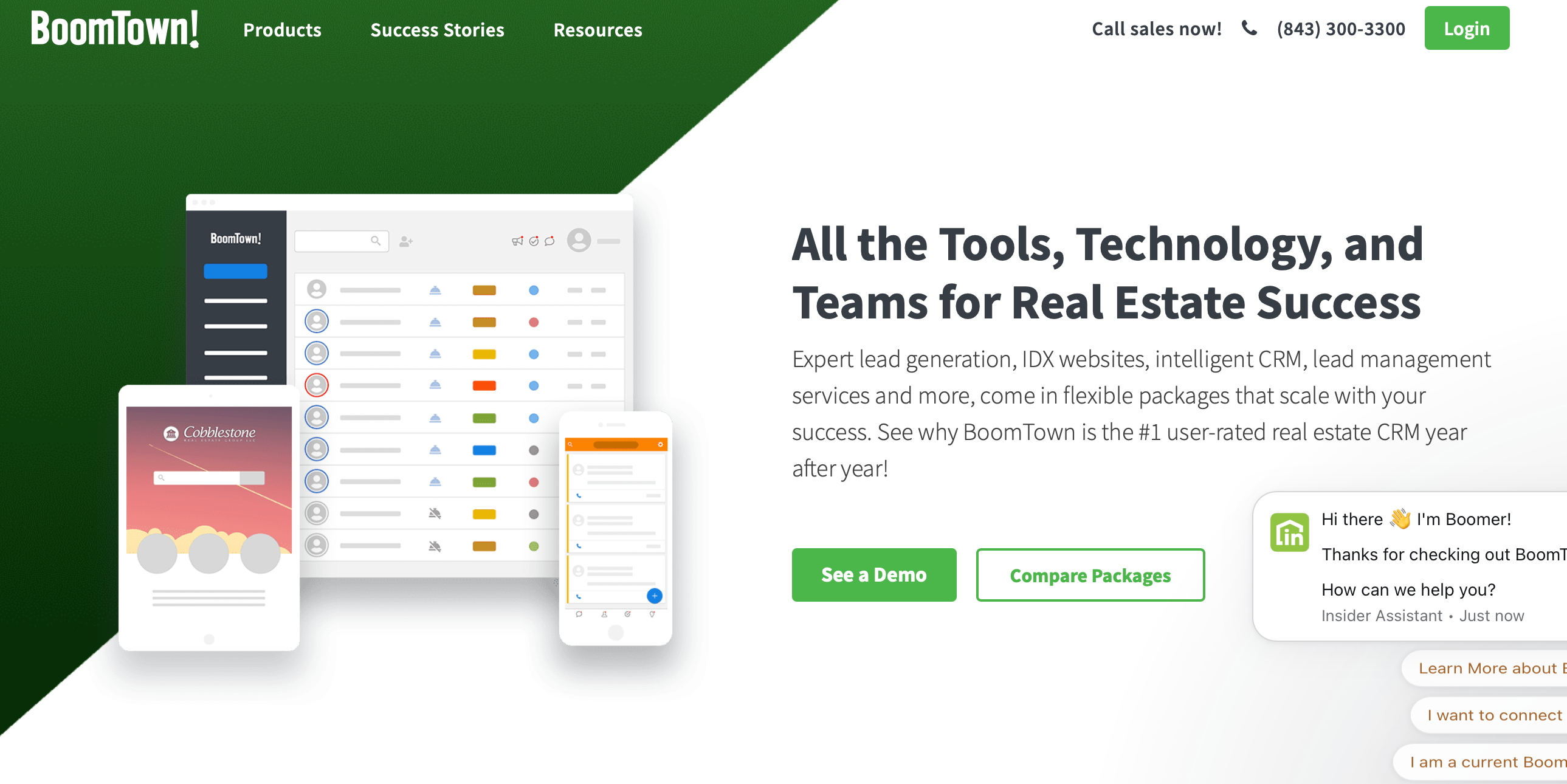
BoomTown is for real estate teams that value structure and oversight, particularly those relying on paid lead programs and standardized follow-up processes.
Key features
- Predictive CRM: Highlights “Now” opportunities based on lead behavior.
- Accountability: Managers can easily see if agents are following the required contact protocols.
- Concierge: Offers lead qualification services to scrub leads before they get to agents.
Any tradeoffs
It is one of the more expensive options. Some teams find that the closed ecosystem makes it difficult to integrate niche third-party tools.
Best for
Established teams with a budget that want a structured platform with high visibility into agent performance.
5. Real Geeks
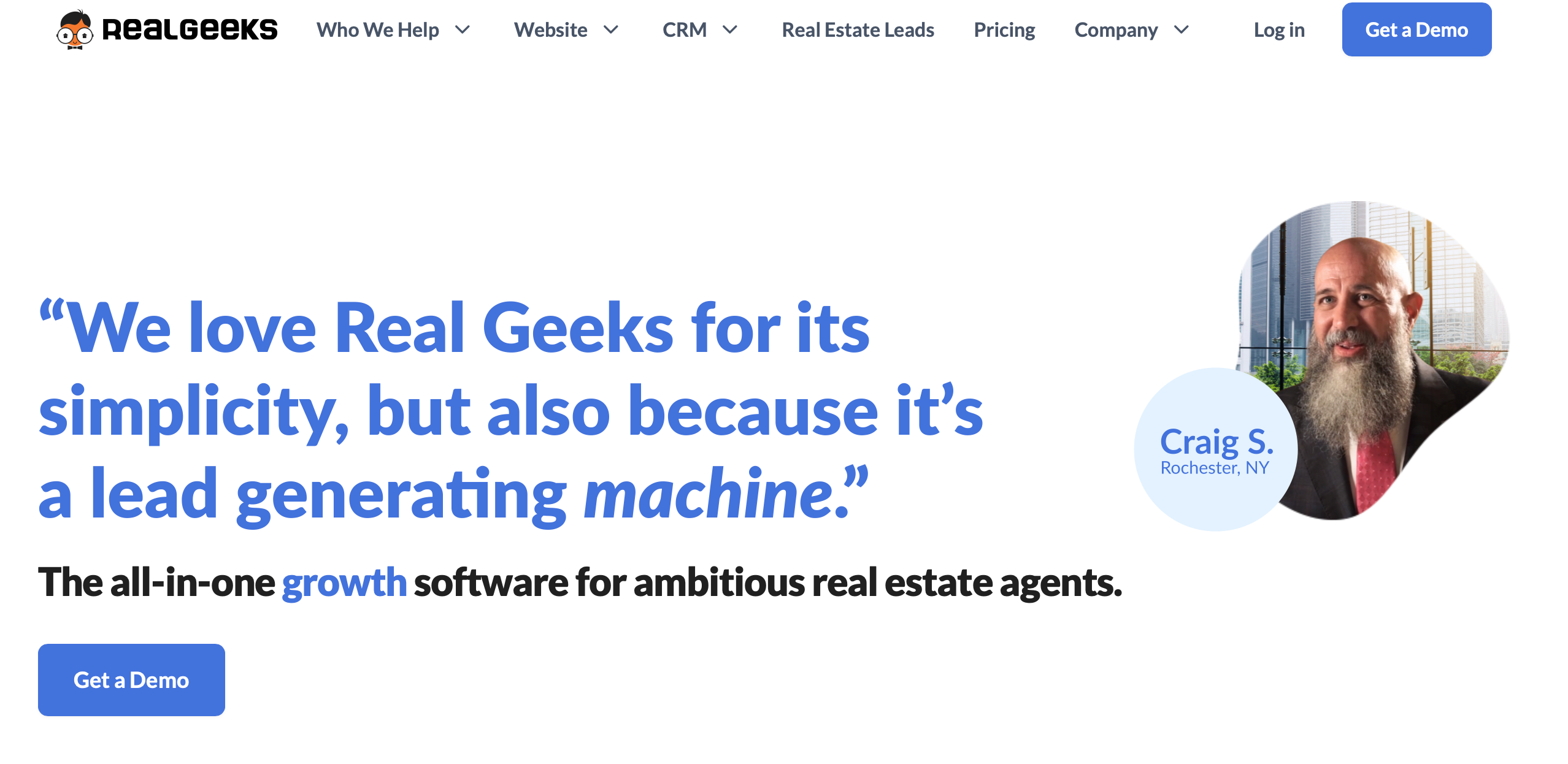
Real Geeks is a combined IDX website and CRM platform often used by agents and small teams that want built-in lead capture and follow-up without enterprise-level complexity or pricing.
Key features
- CRM and website pairing: The CRM is tightly integrated with the IDX site, making it easy to see what leads are looking at.
- SMS auto-responders: Simple but effective tools to get engagement immediately after signup.
Any tradeoffsReporting is not as deep as Follow Up Boss or BoomTown. Complex routing rules for large teams may feel limited.
Best for
Small teams and small-to-mid-sized teams who want a bundled, practical system that requires less administrative overhead.
6. Sierra Interactive
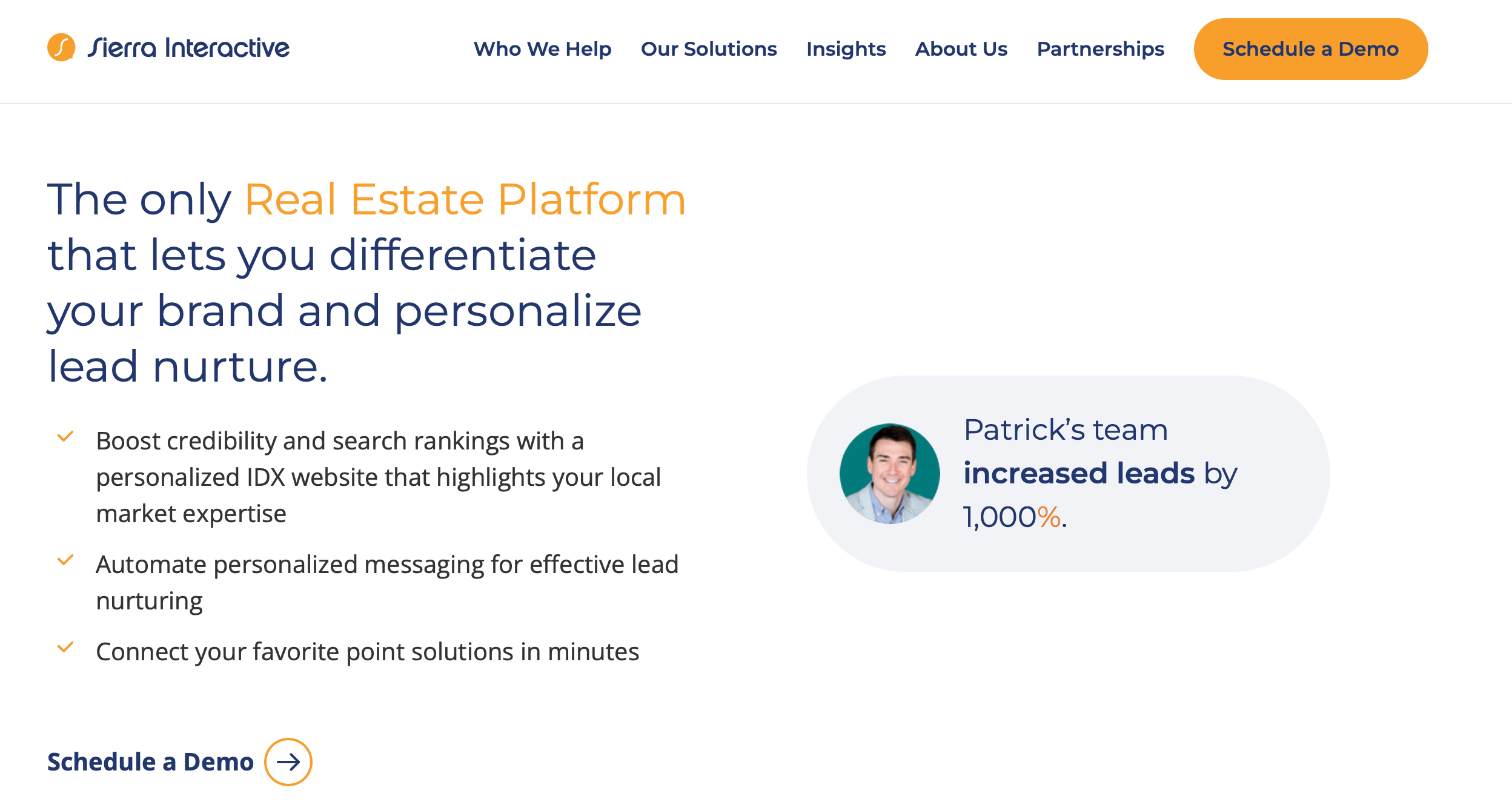
Sierra Interactive is often chosen by SEO-focused teams. Their websites are known for high performance, and the CRM is built specifically to leverage the traffic those sites generate.
Key features
- Site + CRM: The system excels at keeping agents in the loop on site activity.
- Granular routing: diverse options for how leads are assigned.
- Action plans: robust drip campaigns for text and email.
Any tradeoffs
Similar to other bundled options, if you want a standalone CRM to plug into various tools, this ecosystem might feel restrictive. Customization can take time.
Best for
Teams that want a high-performance website and IDX experience with a CRM designed around that specific ecosystem.
7. Top Producer
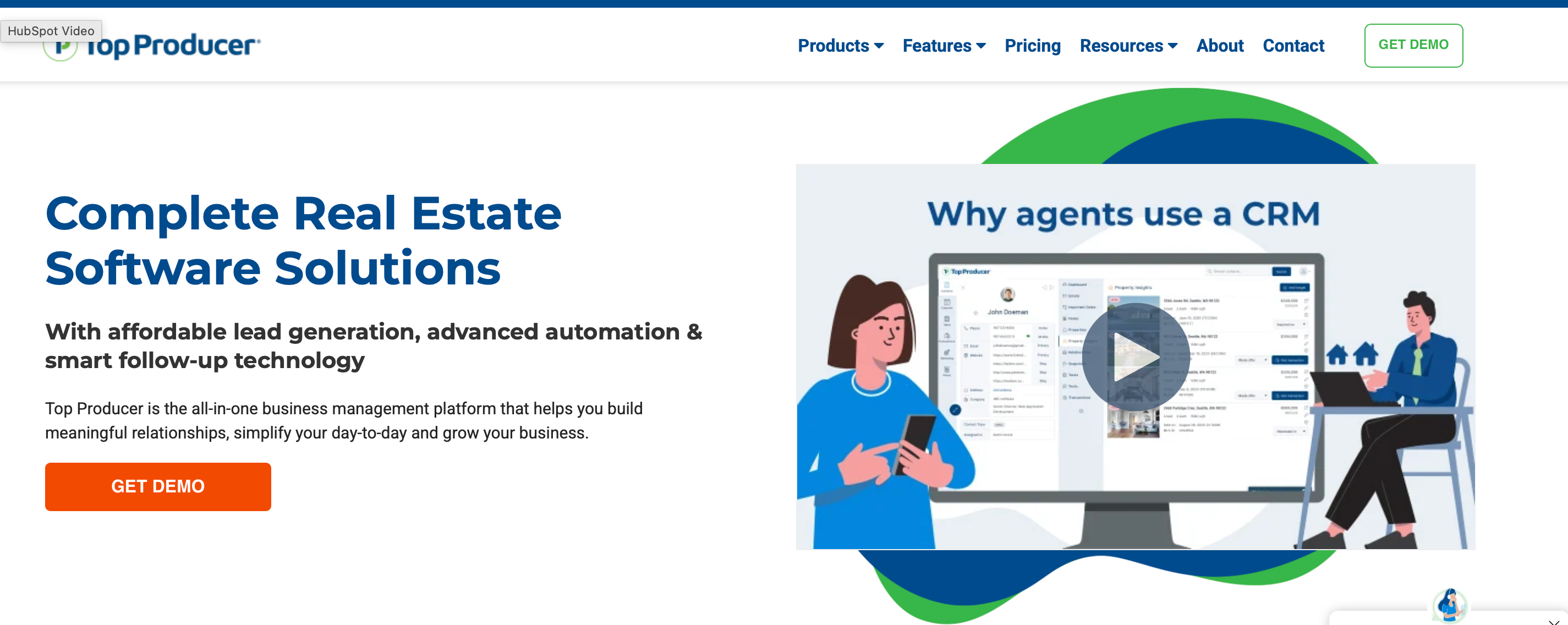
Top Producer is often used for database management and long-term nurture rather than aggressive speed-to-lead.
Key features
- Market snapshot: A classic feature that sends localized market updates to homeowners.
- Transaction management: Tools for managing the contract-to-close process.
- Follow-up Coach: Suggets who to call based on your database.
Any tradeoffs
Teams wanting modern, instant lead routing and deep behavioral automation often find it lagging behind newer competitors.
Best for
Teams that want a proven, stable CRM for follow-up discipline and database management rather than high-velocity lead conversion.
8. Wise Agent
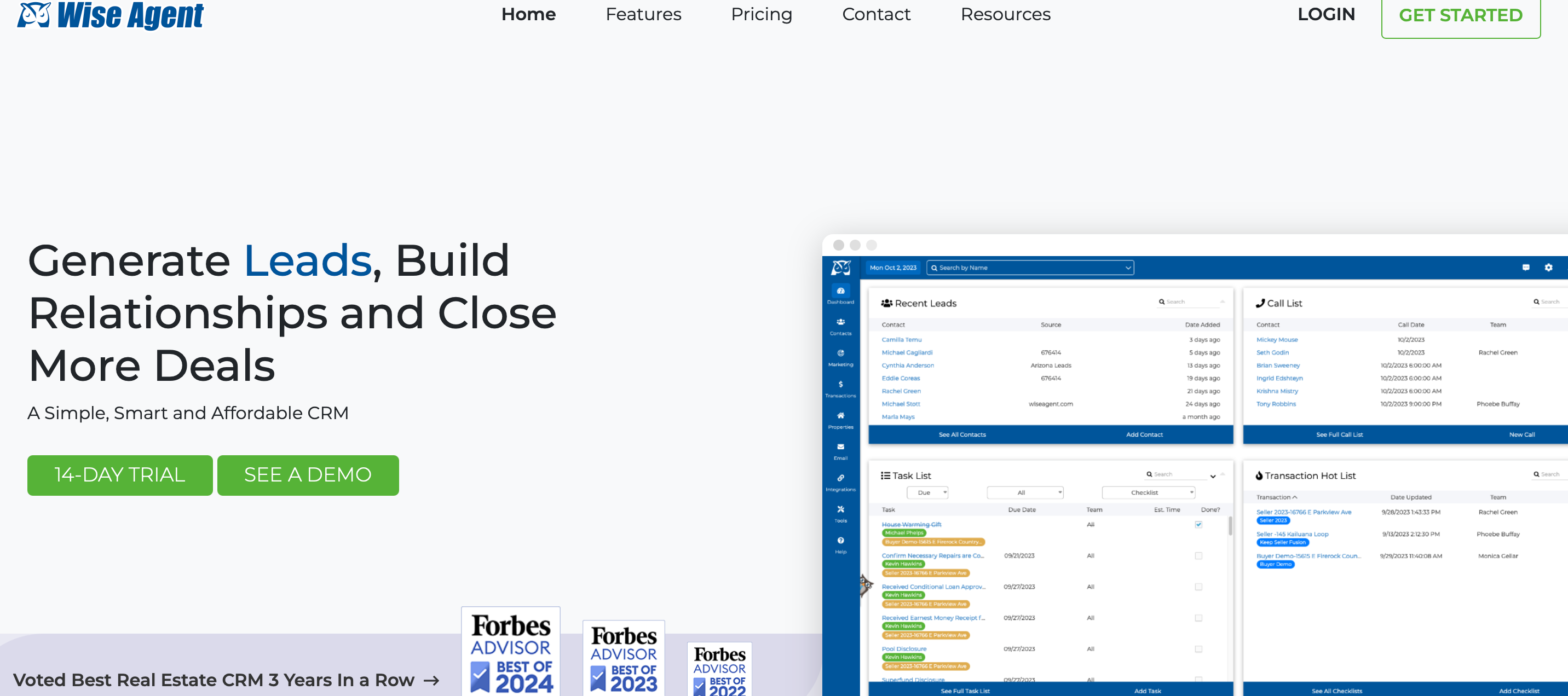
Wise Agent offers a very broad feature set at a very accessible price point. It covers everything from transaction checklists to marketing newsletters.
Key features
- Landing pages: Built-in tools to create single-property sites.
- Call list: Automates the creation of daily call lists for agents.
- Team permissions: Basic tools to share calendars and contacts.
Any tradeoffs
While it does a lot, it doesn’t always go “deep” on features like complex routing or advanced IDX behavioral triggers.
Best for
Smaller teams or teams early in their process maturity who want a solid baseline CRM that won’t break the bank.
9. HubSpot (With Real Estate Integrations)
HubSpot is not a real estate CRM, but rather a global CRM giant. However, for teams that want enterprise-grade automation and reporting, it is a powerhouse—if you are willing to build it.
Key features
- Unlimited Customization: You can build almost any workflow or report you can imagine.
- Marketing Hub: Best-in-class email marketing and ad tracking tools.
- Ecosystem: Integrates with thousands of apps.
Any tradeoffs
It is not “out of the box” ready for real estate. You have to configure pipelines, properties, and integrations yourself. It can get expensive quickly as you add seats and features.
Best for
Larger teams or operators who want deep automation and reporting and have the operations staff to manage the system.
The Right CRM for Managing IDX Leads
Effective lead nurturing is essential for converting IDX lead data, and access to up-to-date MLS listings and real estate IDX features is critical for maximizing your CRM’s potential.
The “best” CRM is the one that handles the handoff from your website to your agents without friction.
Additionally, neighborhood pages can help teams demonstrate local expertise and attract more targeted leads.
1. Lead Capture and Integration Quality
The connection between your IDX provider and your CRM should be foolproof. You need direct integrations or API connections that map fields correctly. It isn’t enough to just get a name and email.
Your CRM needs to capture the context of the lead. What property were they looking at? Did they save a search? What is the source?
Additionally, integrating relevant links within your IDX website can improve user experience and SEO, making it easier for leads to navigate listings and related resources.
2. Lead Routing and Team Workflows
Speed-to-lead is the single biggest predictor of conversion for online leads.
Your CRM must support complex routing rules. Look for “round robin” distribution to ensure fairness, but also consider priority routing based on performance, coverage schedules, or geographic territories.
Advanced teams often look for “shark tank” or “jump ball” features where unworked leads are released back to the pool, as well as specific routing for Inside Sales Agents (ISAs) before handing off to closing agents.
3. Automation that Matches IDX Behavior
Generic “checking in” emails do not convert IDX leads. The best CRMs trigger automation based on specific behaviors. If a lead registers, favors a listing, or returns to the site after 30 days of silence, the CRM should automatically fire a relevant text or email.
Look for sequences that combine communication methods—voicemail drops, text messages, emails, and task reminders for agents to make a physical call.
Scheduling follow-ups and tasks by day of the week can help agents maintain consistent engagement with leads.
4. Pipeline Visibility and Accountability
Team leaders need to know who is working and who is slacking. Your CRM should provide clear reporting on lead response times, call attempts, and appointments set. You need to see exactly where every lead sits in the pipeline, from “New Lead” to “Under Contract.”
5. Data Hygiene at Scale
A lead might register with a personal email today and a work email tomorrow. The right CRM needs robust deduplication logic and merge rules to keep your database clean. It should also have the ability to filter out obviously fake leads (like “Mickey Mouse” or “123-456-7890”) so your agents don’t waste time.
6. Team Permissions and Roles
You don’t necessarily want every agent to have access to the entire database of clients.
A team-focused CRM will offer granular permission settings. You should be able to control export rights, hide contact info if necessary, and view reports by team, individual agent, or lead source.
Decision Guide: IDX Website and CRM Checklist
Selecting software isn’t about the features you might use; it’s about the problems you need to solve right now.
If you are a high-volume IDX team: You could be drowning in leads and need order. Prioritize routing, deduplication, and accountability dashboards.
If you want “one vendor” simplicity:You don’t want to manage APIs or multiple logins. You are willing to standardize your team’s processes to fit the software, but client support would be a nice perk.
If you are a small team scaling up:Y ou need to move away from spreadsheets but aren’t ready for enterprise costs. Prioritize ease of use and automation basics.
Action Plans and Sales Strategies for IDX Teams
A real estate CRM should help IDX teams move from raw traffic to real conversations. Use this checklist to assess whether your system supports how leads actually behave in today’s market:
- Clear action plan for every lead: Automatically define next steps based on lead source, behavior, and urgency so no inquiry sits untouched.
- Personalized messaging that reflects intent: Tailor emails and texts based on saved searches, viewed properties, and price ranges to keep outreach relevant.
- Automated follow-up with room for human touch: Use automation to handle speed and consistency while surfacing the right moments for agents to step in personally.
- Property alerts that drive engagement: Deliver timely, behavior-based property alerts that align with what buyers are actively searching for.
- Structured workflows to nurture leads long-term: Support extended buying cycles with drip campaigns that evolve as interest and readiness change.
- Lead activity and market visibility: Track engagement signals and market trends to identify serious buyers and prioritize follow-up.
- Marketing tied to measurable outcomes: Connect campaigns to conversations, appointments, and conversions—not just clicks. Use proven marketing strategies to keep buyers interested in your brand content.
When paired with a strong action plan, the right real estate CRM helps IDX teams nurture leads more effectively and stay competitive in a fast-moving market.
Implementation checklist: IDX → CRM That Actually Works
Making your software work requires a reputable, workable process. Use this checklist to ensure your investment pays off.
- Define source naming conventions: Before you connect your IDX to your CRM, decide on the names. Is it “Website Lead” or “IDX Registration”? Consistency is key for reporting.
- Set routing rules: Determine how leads will be distributed. Will you use round robin? Do top producers get higher price points? Does the “night shift” get leads after 8 PM?
- Build 3 core workflows: Don’t overcomplicate it. Start with:
- New IDX Registration: Speed-to-lead focus (SMS + Call).
- Active Shopper: Triggered when a lead views 3+ homes (Soft check-in).
- Long-term Nurture: Triggered when there is no activity for 30 days (Market report value add).
- Set data hygiene rules: Schedule a weekly task to merge duplicates and filter out fake leads.
- Create weekly scorecard metrics: Measure what matters. Track response time, call attempts, and appointments set—not just “leads generated.”
Turn your website into a real lead engine
Your CRM runs operations, but your IDX website determines lead quality. If leads arrive late, incomplete, or disconnected from buyer intent, even the best CRM can’t recover the value.
Strong teams focus on the handoff. Capturing search behavior, identifying intent early, and delivering clean data into the CRM makes follow-up faster and more effective.
iHomefinder is built for that connection. Its flexible IDX tools and CRM integrations help teams generate higher-quality leads—without locking them into an all-in-one system that limits how they work.
Better leads start at the front door. Get your demo today.
Frequently Asked Questions (FAQs)
What is the best CRM for real estate teams using IDX?
There is no single “best” CRM, but for teams prioritizing lead conversion, Follow Up Boss is often top-rated for its routing and integration capabilities. For teams wanting an all-in-one solution, kvCORE or Real Geeks are strong contenders.
Do I need a CRM if my IDX platform already captures leads?
Yes. Most IDX platforms have basic back-end systems, but they lack the advanced routing, pipeline management, and transaction tracking that a true CRM provides. A CRM allows you to manage the relationship after the capture, leading to more deals.
How do IDX leads flow into a CRM?
Leads flow via integration. This can be a native (direct) integration, a third-party connector (like Zapier), or via email parsing. The best method is a native API integration, which ensures data like saved searches and viewed properties is transferred accurately.
What’s the most important CRM feature for an IDX team?
Routing. If you cannot get the lead to the right agent instantly, the other features don’t matter. After routing, automated follow-up (speed-to-lead) and reporting are tied for second.
How do teams prevent duplicates and bad IDX registrations?
A good CRM will have “fuzzy logic” to merge contacts with matching emails or phone numbers. To prevent bad registrations, some teams use two-step verification on their IDX forms, though this can lower conversion rates.