

IDX Feed Real Estate: How MLS Data Powers Your Website
An IDX feed in real estate is a data connection that allows a real estate website to display property listings directly from the MLS. The IDX feed automatically updates listings, prices, and status changes so buyers can search active homes on an agent or brokerage website in real time.
For agents and brokerages, this is a big deal. Buyers no longer start their home search by calling an agent—they go straight to Google. If your website can’t surface accurate, up-to-date listings, you’re losing those visitors to Zillow or a competitor who invested in the right technology.
A well-implemented IDX feed or property search does two things at once: it gives buyers a powerful search tool and gives agents a steady stream of organic traffic and leads. This article breaks down exactly how IDX feeds work, how MLS data flows from the source to your website, and what to look for when choosing an IDX provider.
What Is an IDX Feed in Real Estate?
IDX stands for Internet Data Exchange. It’s a policy framework and technology standard that allows real estate agents and brokerages to display each other’s MLS listings on their own websites.
Here’s how it works: MLS organizations—regional databases that store property listings from participating brokerages—license their data to approved IDX vendors. Those vendors then distribute the feed to agent and brokerage websites. The result is a publicly searchable property database that stays synced with the MLS automatically.
Without IDX, an agent’s website would only show their own listings. With IDX, it can display every active listing in the MLS, giving buyers a complete picture of the market.
What Data Does an IDX Feed Include?
A standard IDX feed pulls a comprehensive set of listing data from the MLS, including:
- Property price and listing status (active, pending, sold)
- Property photos
- Square footage and key features (bedrooms, bathrooms, lot size)
- Listing agent information
- Location and property details (address, neighborhood, school district)
The specific fields available depend on MLS rules, but most feeds include everything a buyer needs to evaluate a property online before booking a showing.
How Often Do IDX Feeds Update?
MLS sync frequency varies by provider, but most modern IDX feeds update real estate listings every 15 minutes or less.
Many platforms now offer near real-time updates, meaning a new listing or a status change from active to pending appears on your site almost immediately.
This accuracy matters more than many agents realize. A buyer who finds a “pending” property listed as “active” on your website loses trust—fast. Fresh, reliable data is the foundation of a good user experience.
How an IDX Feed Powers a Real Estate Website
Step 1: MLS Real Estate Data Collection
Everything starts at the MLS (Multiple Listing Service). MLS boards are the organizations that manage the MLS database and act as gatekeepers for IDX data feeds, controlling the data that agents use on their websites. Brokerages and agents, who are licensed brokers, submit their listings to the MLS database, where the data is standardized and stored.
Through broker reciprocity, brokers participate in the MLS and benefit from the cooperative sharing of listings, allowing them to access and display a wider range of property listings via IDX. This centralized repository is the single source of truth for property listings in a given market.
Step 2: IDX Feed Distribution
The MLS licenses its data to approved IDX vendors under specific terms and conditions. Various companies provide IDX services, handling the technical aspects of data integration and compliance for real estate professionals.
Vendors are responsible for maintaining data accuracy, respecting MLS display rules, and ensuring compliance with IDX policies.
Step 3: IDX Platform Integration
Once an agent selects an IDX provider, the provider integrates the feed into their website. Integrating IDX data directly on your own website, especially with a direct connection to your local MLS, gives you more control over how listings are displayed and enhances your branding.
This might involve a WordPress plugin, a hosted solution, or a custom API connection depending on the platform. A well-built IDX website acts as a 24/7 digital agent, showcasing listings and converting visitors into leads.
Step 4: Listings Appear on Your Website
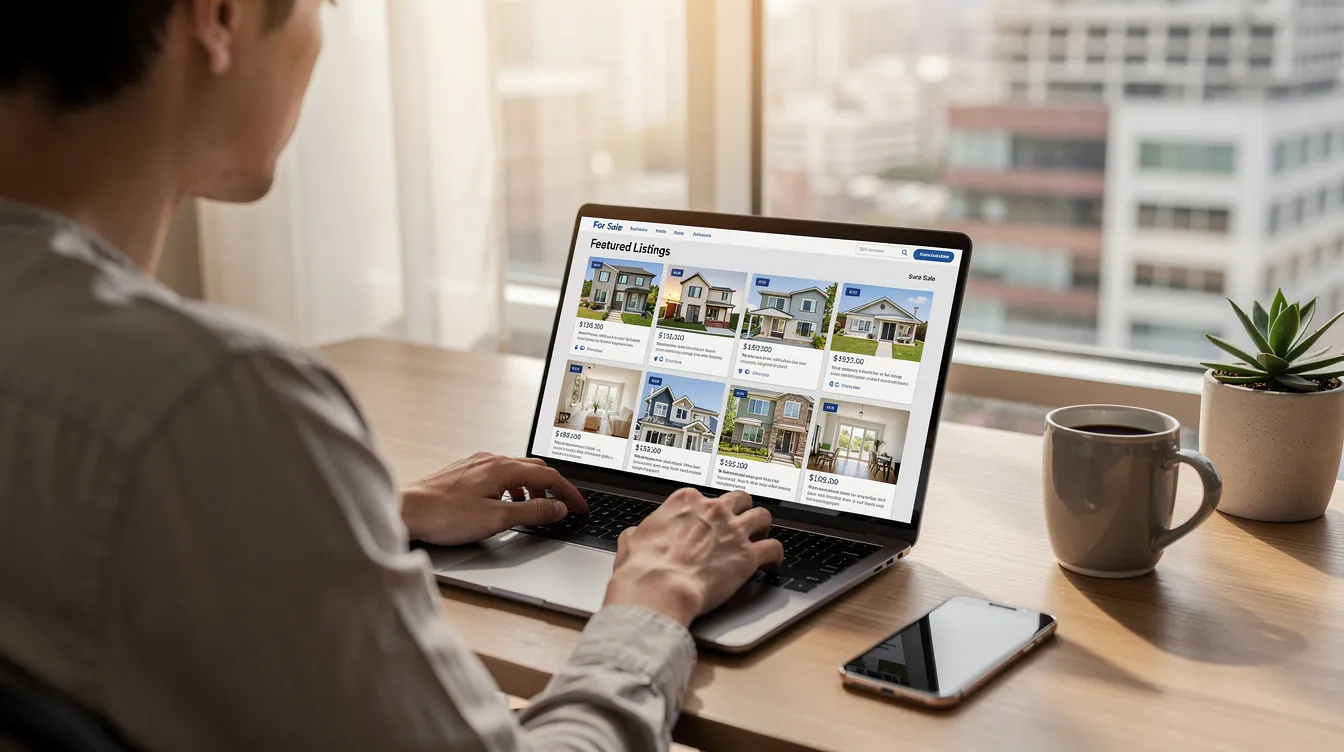
After integration, your website becomes a fully functional property search portal. Buyers can browse all the listings, filter by price or features, explore an interactive map, and view individual property detail pages—all of which can be indexed by search engines, provided your IDX platform supports SEO-friendly URLs, custom page titles, and meta descriptions.
Key Features IDX Feeds Enable on Real Estate Websites
IDX feeds aren’t just a data pipe. When implemented correctly, they unlock a suite of features that drive both lead generation and SEO performance:
- IDX search: A robust IDX search is essential for real estate websites, offering multiple search options—including advanced filters and map-based search—to enhance user engagement and satisfaction.
- MLS property search: Buyers can filter listings by price, location, bedrooms, and more
- Interactive map search: Visual browsing by neighborhood or commute radius
- Saved searches and alerts: Buyers get notified when new listings match their criteria
- Property detail pages: Individual listing pages with photos, features, and agent contact forms
- Automated listing updates: No manual work required to keep listings current
- Lead capture forms: Inquiry forms, saved search sign-ups, and contact requests feed directly into your CRM
Each of these features serves a dual purpose—improving the buyer experience while creating conversion opportunities for the agent. Additionally, analytics and performance tracking provide valuable insights into user behavior, helping you continually improve your website’s effectiveness.
Why IDX Feeds Are Important for Real Estate SEO
Every listing on your IDX website becomes an indexable page, which is crucial for SEO because it allows search engines to index your content and improve your site’s visibility.
MLS Listings Create SEO Content
A property at 123 Main Street in Austin becomes an indexable URL that Google can crawl, index, rank, and surface in search results. Multiply that across hundreds or thousands of active listings, and you have a significant volume of SEO content that updates automatically.
Neighborhood and Map Search Pages
Beyond individual listings, IDX platforms can generate neighborhood and community pages that target long-tail searches like “3-bedroom homes for sale in Naperville, IL” or “condos near downtown Denver under $400k.”
When users land on your site, engaging neighborhood and map search features help them explore available properties more effectively. These pages attract buyers who are deep in the research phase—exactly the audience most likely to convert.
Fresh MLS Data Signals Activity to Google
Search engines reward websites that publish fresh, regularly updated content. Because IDX feeds sync with the MLS continuously, your site is always changing—new listings added, prices updated, statuses changed. This activity signals to Google that your site is current and authoritative, which can improve crawl frequency and overall rankings.
IDX Feed vs MLS Access: What’s the Difference?
This is a common point of confusion. Here’s a quick breakdown:
| Feature | MLS Access | IDX Feed |
|---|---|---|
| Who uses it | Real estate agents | Public website visitors |
| Data access | Full MLS database | Approved subset of listings |
| Purpose | Agent workflow and transaction management | Consumer-facing property search |
MLS access is the backend tool agents use to manage listings, run comparative market analyses, and track transactions. An IDX feed is the public-facing layer—a filtered, display-friendly version of MLS data designed for consumer property search on agent websites.
Agents need both. MLS access runs their business; the IDX feed brings buyers to their website.
It’s important to note that large real estate portals like Zillow and Trulia often rely on brokerage syndication to receive listing data from brokerages. This method can sometimes result in less accurate or outdated information compared to direct IDX feeds, which pull data straight from the MLS.
How to Get an IDX Feed for Your Real Estate Website
Join an MLS That Supports IDX
To display IDX listings, you must be a participating member of an MLS that has an IDX policy in place. MLS boards are responsible for setting IDX policies and ensuring compliance among their members. Most regional MLS organizations in the U.S. support IDX, but membership requirements vary. If you’re licensed and affiliated with a brokerage, you likely already have MLS access.
Choose an IDX Provider
Once you have MLS membership, you’ll need to select an IDX vendor that is approved by your MLS. Many companies offer IDX services, so it’s important to evaluate their features, reliability, and support before making a choice. IDX providers handle the technical integration, data compliance, and ongoing feed maintenance. They differ significantly in features, performance, and pricing, so it’s worth evaluating a few options before committing.
Connect the Feed to Your Website
The integration process depends on your website setup. Most IDX providers offer WordPress plugins, hosted website solutions, or developer APIs. Some IDX providers use a RETS feed (Real Estate Transaction Standard), which is a protocol that allows for efficient and customizable data management between MLS systems and real estate websites. Your IDX provider will typically guide you through the MLS approval process, which involves submitting a data license agreement before the feed goes live.
Common IDX Feed Challenges for Real Estate Websites
Not all IDX implementations are created equal. Agents frequently run into these issues with lower-quality platforms:
- Slow page load speeds: IDX pages loaded with unoptimized images and bloated scripts hurt both SEO and user experience
- Limited customization: Generic search interfaces that don’t match a brand’s design or workflow
- Poor mobile search experience: IDX tools that weren’t built with mobile-first design in mind
- Weak SEO structure: Listing pages without proper metadata, canonical tags, or crawlable URLs. Some older IDX solutions, such as IDX Broker, rely on iFrames or subdomains, which can negatively impact SEO and user experience.
- Disconnected CRM systems: Leads captured through IDX that don’t flow into follow-up workflows
These challenges explain why platform choice matters as much as the data feed itself. The MLS data is largely the same across providers—what differentiates them is how they deliver and leverage it.
What to Look for in an IDX Feed Provider
When evaluating IDX providers, prioritize the following:
- MLS coverage: Does the provider support your specific MLS?
- Website speed and performance: Are listing pages fast-loading and mobile-optimized?
- SEO-friendly listing pages: Does each listing page have unique, indexable content and clean URLs?
- Lead capture tools: Are there built-in forms, saved search prompts, and registration gates? Purposeful lead capture strategies, such as smart calls to action, are essential for converting visitors into leads.
- CRM integration: Can leads flow automatically into your CRM for follow-up?
- Automation for follow-ups: Does the platform support automated listing alerts and drip campaigns?
Modern IDX platforms are designed to meet the needs of consumers, including both home buyers and sellers, by providing accurate MLS listings and valuable tools like home valuation features. These tools help attract homeowners looking to sell and assist home buyers in their property searches.
The best IDX platforms don’t just display listings—they turn website visitors into captured leads and nurture them toward a conversation.
How iHomefinder Delivers High-Performance IDX Feeds
iHomefinder is built around the idea that an IDX feed should do more than show listings—it should generate business.
For example, iHomefinder delivers accurate, real-time listings by integrating directly with MLS data, ensuring that agents and their clients always see the most up-to-date properties. This real-time accuracy supports lead generation by allowing agents to respond quickly to new listings and client inquiries.
Lead capture is built into every layer of the search experience. Behavioral tracking monitors what buyers view, save, and search for—giving agents insight into buyer intent before they ever make contact. That data flows directly into CRM integrations, triggering automated listing alerts and follow-up sequences that keep leads warm.
For agents who want their website to work as a lead generation tool—not just a digital business card—iHomefinder provides the infrastructure to make that happen.
Build a Website That Generates Leads
IDX feeds are the engine behind every effective real estate website. They bring MLS data to buyers in real time, create the indexable content that drives organic search traffic, and power the lead capture tools that turn visitors into clients.
The data is only part of the equation, though. How that data is delivered—the speed, the structure, the conversion tools built around it—determines whether your website works for you or sits idle.
If you want an IDX feed that delivers fast MLS updates, SEO-friendly listing pages, and built-in lead capture tools, iHomefinder provides a complete IDX platform designed for modern real estate websites.
FAQs: IDX Feed Real Estate
What is an IDX feed in real estate?
An IDX feed is a data connection that allows a real estate website to display MLS listings automatically so buyers can search available properties online.
How does an IDX feed work?
The MLS provides listing data to an IDX provider, which integrates the feed into a real estate website so property listings update automatically.
Do all real estate websites use IDX feeds?
Most modern agent and brokerage websites use IDX feeds to display MLS listings and capture buyer leads.
Is an IDX feed required to show MLS listings?
Yes. MLS rules require agents to use IDX technology when displaying other brokerages’ listings on their websites.


Leave a Reply
Want to join the discussion?Feel free to contribute!