

Top Real Estate Website Features Agents Actually Use to Grow
If you ask ten different developers what makes a great website, you will likely get ten different answers about design trends, color theory, and coding languages. But if you ask a top-producing real estate agent, the answer is usually much simpler: “Does it bring me business?”
Many real estate websites look incredible on the surface. They feature sweeping drone footage, high-resolution headshots, and sleek animations. Using customizable templates allows agents to create a visually appealing and personalized website that makes a strong first impression, even without design skills. Yet, a surprising number of these sites fail to do the one thing they are built for—generating actionable leads.
For agents, a website needs work as hard as you do. A strong digital presence establishes credibility, attracts potential clients, and helps your real estate business stand out in a competitive market.
What Real Estate Website Features Matter Most to Agents?
The most valuable real estate website features are the ones agents use daily to attract traffic, capture leads, and manage follow-up. These include:
- IDX property search
- Lead capture tools
- CRM integrations
- SEO-friendly pages
- Automation features that save time as business grows
Identifying the most important features is crucial for driving business growth and ensuring your real estate business thrives online.
Website Design and User Experience
A high-performing real estate website starts with a design that puts property listings front and center. Real estate agents know that first impressions matter, so they look for a clean, modern layout that makes it easy for visitors to browse homes and find the information they need. Essential elements include:
- High quality visuals
- Professional photos
- Virtual tours
- Video content to showcase property features and help listings stand out
Navigation should be intuitive, allowing users to filter and sort listings without frustration. Detailed descriptions, clear pricing, and easy access to property details all contribute to a smooth user experience. Agents also prioritize responsive design, ensuring the estate website looks and works flawlessly on all mobile devices, since so much property search now happens on smartphones and tablets.
How Does User Experience Impact Results?
If visitors struggle to find listings, can’t view property details easily, or get lost in a cluttered layout, they’re likely to leave—resulting in high bounce rates and lost opportunities.
On the other hand, a site that’s easy to navigate, with clear calls to action and prominently displayed contact details, keeps potential buyers engaged and on the site longer.
Big Picture: A user-friendly estate website encourages visitors to explore more listings, save searches, and reach out for more information—turning casual browsers into new leads.
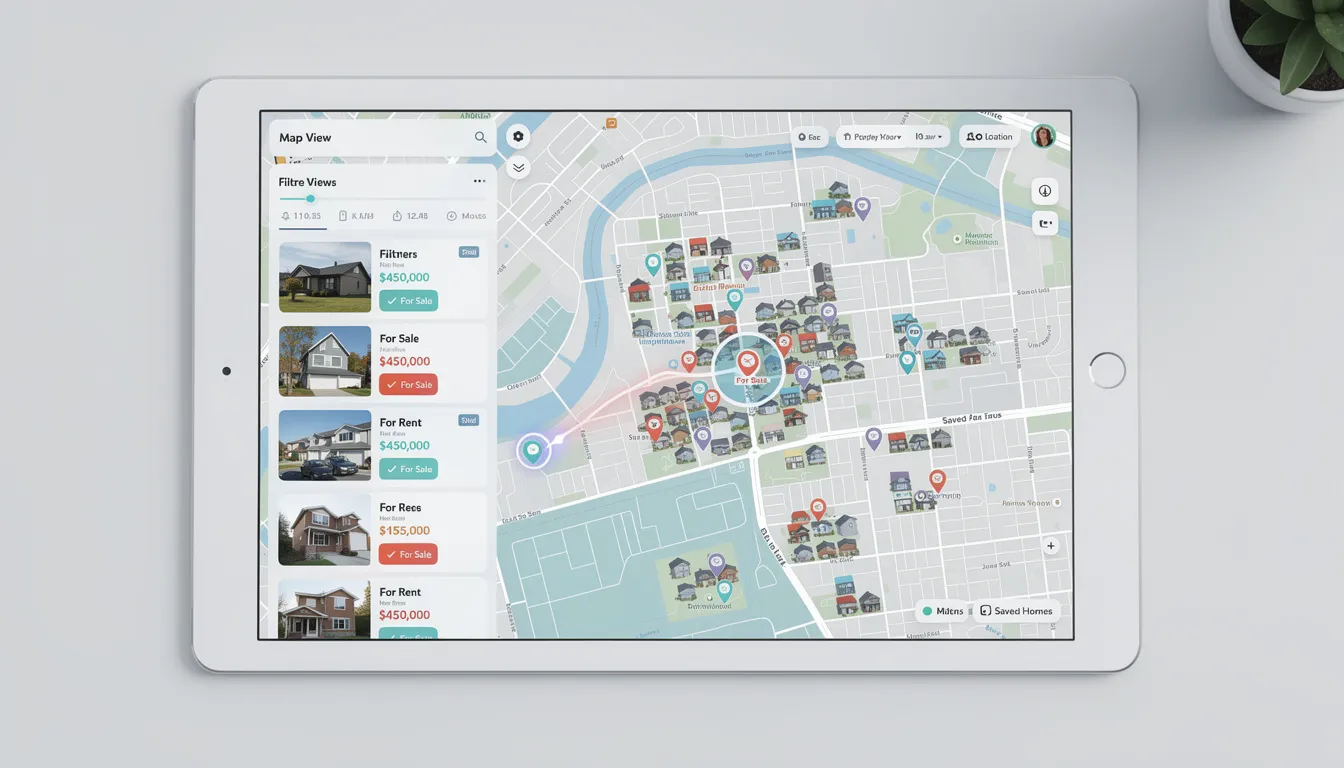
IDX Property Search
An Internet Data Exchange (IDX) feed is the engine of any functional real estate site. Without it, your website is essentially a brochure. IDX integration allows real estate websites to display up-to-date MLS listings, which are essential for user trust and engagement.
Key elements agents rely on:
- Search functionality: Users expect to search by location, price, and other criteria.
- Advanced filters: Features like property type, price range, and amenities are crucial. Advanced property search filters, including property type, are changing the way potential buyers find properties that meet their specific needs.
- Lead capture: Forms and calls-to-action to convert visitors into leads.
- Mobile responsiveness: The site must work seamlessly on all devices.
Why Do Agents Use IDX?
Buyers are conditioned to expect MLS-powered listings. If your site doesn’t allow them to search for homes effectively, you miss out on visibility in search results, making it harder to attract visitors who are looking for properties online.
A modern IDX integration keeps visitors on your site longer, increasing the likelihood that they will reach out to you when they are ready to view a property. It drives repeat visits, turning casual browsers into active prospects.
Elements Agents Need for Growth
- Real-time MLS updates: Nothing frustrates a potential buyer more than falling in love with a home that went under contract three days ago. Updates need to happen as close to real-time as possible.
- Advanced search: Basic search isn’t enough. Advanced search features allow buyers to filter and narrow down property listings based on specific criteria such as school district, HOA fees, price reductions, and specific amenities like pools or waterfront access. This improves user satisfaction, lead quality, and overall website performance.
- Map search: Interactive maps allow buyers to visualize their commute and neighborhood density. Integrating Google Maps into real estate websites helps users visualize property locations and nearby amenities, enhancing the overall user experience.
- Mobile-friendly experience: The search function must work flawlessly on a smartphone, where the majority of home searches begin.
Location and Mapping
Location is everything in real estate, Mapping tools are essential features for agents looking to provide a superior online search experience. By integrating Google Maps or similar mapping solutions into their real estate website, agents empower potential buyers to explore listings in context—seeing exactly where a property sits in relation to local businesses, schools, parks, and transportation.
These interactive maps allow users to visualize their daily commute, check out neighborhood amenities, and get a feel for the area before ever setting foot in a home. Real estate agents can also create custom maps that highlight unique selling points, such as proximity to top-rated restaurants or shopping centers, making it easier for serious buyers to find their ideal property.
Lead Capture Tools that Convert Visitors
You can have thousands of visitors a month, but if you don’t have a way to identify them, you don’t have a business. Effective lead capture is about value exchange—giving the visitor something they want in exchange for their contact information.
Landing pages play a crucial role in capturing leads and converting website visitors into potential clients by focusing on targeted messaging, lead generation tools, and conversion optimization. Client testimonials build trust and credibility for real estate websites, influencing potential clients’ decisions.
Can’t-Miss Features
- Registration prompts tied to listing views: This is the industry standard for a reason. After a visitor views a certain number of photos or properties, a prompt asks them to register to see more.
- Saved searches and alerts: This allows users to create an account to save their favorite homes and get notified when new ones hit the market. It is less intrusive than a forced pop-up and offers genuine value.
- Call-to-action (CTA) placement: Natural CTAs, such as “Schedule a Tour” or “Ask a Question” buttons placed prominently near listing details, generally convert better than generic “Contact Us” pages.
These lead capture features are essential for moving leads through the sales funnel and ultimately closing deals.
Why Aren’t Basic Contact Forms Enough?
A static “Contact Me” page relies on the visitor to take the initiative, but real estate professionals require more advanced lead capture tools to maximize conversions. Most won’t. Dynamic lead capture tools proactively engage the user based on their behavior, significantly increasing conversion rates.
SEO-Friendly Property and Community Pages
Search Engine Optimization (SEO) is the long game of real estate marketing. Real estate SEO involves strategies specifically tailored for real estate websites, focusing on keyword research, on-page optimization, and technical SEO tools to improve visibility and attract potential property buyers.
While paid ads stop working the moment you stop paying, organic traffic compounds over time. However, many real estate websites are built on platforms that make SEO difficult or impossible. Successful SEO starts with ensuring your web page has compelling content that helps answer the searcher’s question or query.
Why Agents Care About SEO
High-intent searches often look like “homes for sale in [Neighborhood Name]” or “condos near [School Name].”Agents who rank for these terms get leads who are further down the sales funnel and ready to buy.
SEO optimization is crucial for outranking competitors this year, as it improves your real estate website’s search engine rankings and online visibility.
Features that Matter
- Indexable listing pages: Some IDX solutions display listings in an “iframe,” which essentially hides them from Google. Agents need listings that live on their own URL so search engines can read them.
- Clean URLs: A URL like yoursite.com/downtown-condos is far better for SEO than yoursite.com/idx?id=39485&search=2.
- Community Pages: The ability to easily create custom pages for specific neighborhoods or subdivisions is crucial. These pages act as landing zones for local search traffic.
- Page speed: Google penalizes slow websites. Optimization for fast loading is a non-negotiable technical feature.
Website analytics are also essential for tracking SEO performance, understanding user behavior, and making data-driven improvements.
Quality blog content has become the life-blood of successful real estate websites.
CRM Integration and Lead Routing
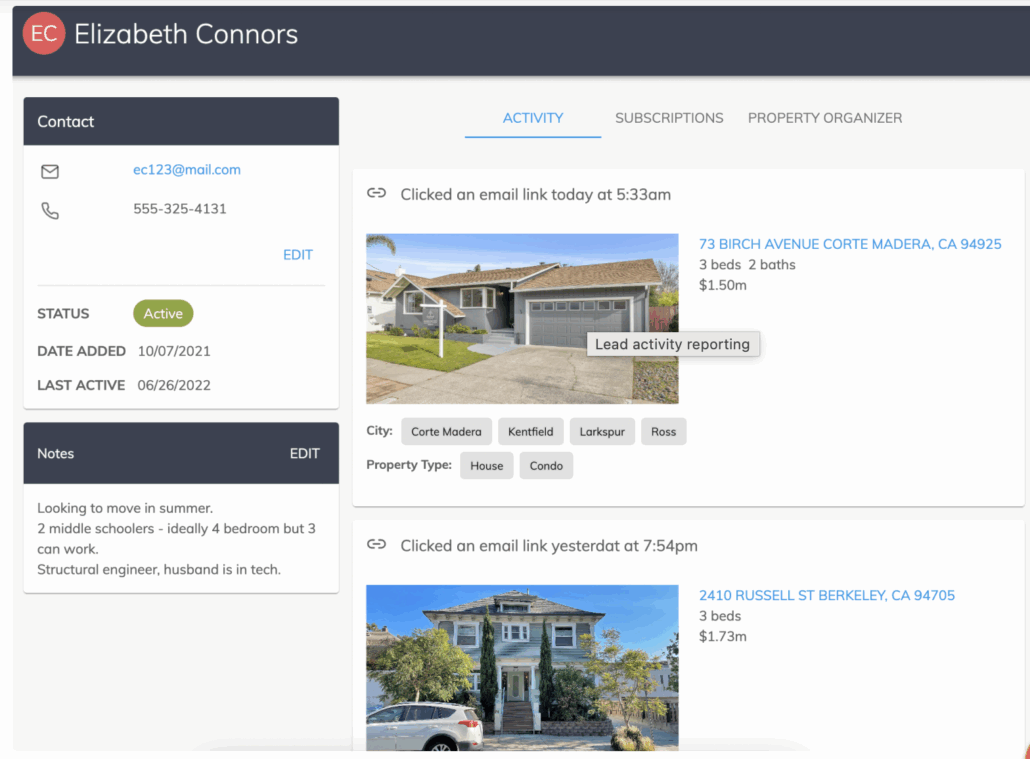
Your website is the net; your Customer Relationship Management (CRM) system is the bucket. If there is a hole between the two, you lose money. Many IDX providers offer integrated form builders designed specifically for real estate websites, which connect seamlessly with CRM systems to streamline lead management and maximize conversions.
Day-to-day agent value
The most efficient agents refuse to manually copy-paste lead details from an email notification into a database. Real estate website features must include direct CRM integration, and using a real estate website builder can simplify this process by offering built-in CRM connectivity.
When a lead registers on the site, their name, phone number, email, and the property they were looking at should appear instantly in the CRM.
Why this Feature Matters
- Faster follow-up: Speed to lead is the biggest predictor of conversion. Automated routing ensures the lead is contacted immediately, often via an auto-responder text or email.
- Scales with teams: For team leads and brokers, automated routing rules can assign leads to specific agents based on zip code, price point, or round-robin rotation.
- Prevents lost leads: Automation eliminates the human error of “forgetting” to enter a lead.
Saved Searches and Listing Alerts
This is perhaps the single most powerful automation tool in a real estate agent’s arsenal. It turns a one-time visitor into a long-term prospect without requiring the agent to lift a finger. Providing a user friendly experience is key to encouraging users to save searches and return to the site.
How Agents Used Saved Search
When a lead saves a search (e.g., “3-bed, 2-bath, under $500k in Austin”), the website should automatically email them whenever a matching property hits the market. This somewhat obvious trick can help clients find their dream home more efficiently.
Why it Works
Saves keep the agent top-of-mind. Every morning, the potential buyer sees the agent’s branding in their inbox alongside the houses they want to see. It provides timely, relevant value. When the buyer sees the perfect house, they reply to that email, re-engaging with the agent exactly when their motivation is highest.
Mobile Optimization and Performance
It is no longer accurate to say “mobile-first.” For real estate consumers, it is often “mobile-only.” Mobile optimization ensures that users can quickly and seamlessly search for properties, making it easier for them to find their dream home.
Why Mobile is Non-Negotiable
If a user pinches and zooms to read text, or if a map crashes their browser, they are gone. A slow site hurts engagement, but it also hurts your Google rankings.
Key features
- Responsive design: The site layout should fluidly adapt to any screen size, from an iPhone Mini to a widescreen desktop monitor.
- Touch-friendly navigation: Buttons need to be large enough to tap easily. Image galleries should support swiping.
- Fast load times: Listings are image-heavy. A good real estate website compresses images automatically so the page loads instantly, even on a cellular data connection.
Automation and Time-Saving Tools
The goal of technology is to buy back time. Real estate professionals benefit greatly from automation and time-saving website features that streamline their daily tasks and improve efficiency. The most adopted real estate website features are the ones that remove administrative burdens.
Features for Agents
- Automated market reports: Sending a monthly email to past clients with sold data in their neighborhood.
- MLS compliance: Ensuring the site automatically displays the required brokerage logos and disclaimers, protecting the agent from fines.
- Listing updates: When a price changes in the MLS, it should change on the agent’s site instantly without manual data entry.
The result is less admin work, meaning more time for face-to-face client interactions. In real estate, this is where the actual money is made.
Features Agents Don’t Use (and Why)
Just as important as knowing what to look for is knowing what to ignore. There is a graveyard of “innovative” features that agents abandon weeks after purchase.
Using a real estate website builder or all-in-one real estate platform like iHomefinder Max can help agents avoid unnecessary complexity by focusing on essential features that add value.
Common Examples
- Overly complex dashboards: If it takes a training seminar to learn how to change the banner image, the agent will never change the banner image.
- Unused widgets: Mortgage calculators are standard, but obscure widgets like “lifestyle heatmaps” often clutter the interface without adding conversion value.
- Features requiring manual setup: Any tool that requires the agent to log in daily to configure settings will eventually be neglected.
Simplicity and reliability matter more than volume. Agents want tools that work out of the box and require minimal maintenance.
How to Choose the Right Real Estate Website Features
If you are evaluating a new website provider or looking to upgrade your current setup, use this checklist to cut through the marketing noise. The real estate industry has specific needs, such as safety measures and digital tools, that your website should address to ensure success.
- Advanced property search and filtering options
- Easy access to MLS listings
- Mobile-friendly design
- High-quality photos and virtual tours
- Lead capture forms and chatbots to help generate leads and stand out in the real estate market
- Integration with CRM and email marketing tools
- Online resources and guides for buyers and sellers
Fast performance has become essential for property professionals, ensuring clients have a seamless experience on your site.
Quick Decision Checklist
- Does this feature help generate leads? If it’s just aesthetic, it’s a lower priority.
- Will it save me time? Does it automate a task I am currently doing manually?
- Does it scale with my business? If I hire a team member, does this system support that?
- Is it mobile-optimized? Test it on your phone before you buy.
- Will my team actually use it? Is the learning curve reasonable?
Closing Thoughts
The best real estate website features are not necessarily the ones with the most awards or the flashiest designs. They are the ones agents use consistently to drive traffic, capture leads, and follow up efficiently. The right features help agents stand out in the competitive real estate market and attract more clients.
Providing detailed information, such as comprehensive neighborhood guides and in-depth property insights, is a key way to differentiate your website from others.
When features align with your daily workflow—and scale as your business grows—your website transforms from a monthly expense into your most profitable business tool. In the real estate industry, the ultimate goal of these features is closing deals.
FAQs: Real Estate Website Features
What features do real estate agents need most?
Agents prioritize features that drive revenue. This includes a robust IDX search, automated lead capture, CRM integration, and mobile responsiveness. Everything else is secondary to these core functions.
Are IDX features necessary for every agent?
Yes. Without IDX, your website is essentially a static brochure. Buyers visit real estate websites to look at homes. If you don’t provide that ability, you are not serving the consumer’s primary need.
Which features help with SEO?
Features that allow for indexable pages are crucial. This includes individual listing pages with clean URLs, community pages with unique content, and a blog platform. Technical speed and mobile responsiveness are also major SEO ranking factors.
How do website features support lead generation?
Features support lead generation by offering value in exchange for contact info. Saved searches, property alerts, market reports, and gated content (like home valuation tools) are the primary mechanisms for capturing leads.

