

What Does an IDX Provider Actually Do for Real Estate Agents?
An IDX provider is the technology that allows a real estate agent to turn their website into a true home search experience. Instead of manually adding listings, an IDX provider connects your site directly to the MLS so buyers can browse real, up-to-date listings in a fast, searchable, and compliant way.
Modern IDX sites do far more than display properties. They power advanced listing searches, keep data automatically updated, and support lead generation through built-in lead capture tools like saved searches, property alerts, and registration prompts. This is how even small agent websites can show thousands of listings and compete with major real estate portals—without sacrificing control of their brand or audience.
Understanding what an IDX provider actually does is essential if your goal is to build a website that generates leads, not just looks good.
The right IDX provider can give a real estate agent a meaningful competitive edge, helping their website work harder than other IDX sites and consistently turn listings into opportunities.
What Is an IDX Provider?
At its core, an IDX provider is the technology that connects a real estate website or website platform to the Multiple Listing Service (MLS). It enables agents and brokers to display live, searchable IDX listings on their own sites while staying compliant with MLS and IDX rules.
IDX, or Internet Data Exchange, is the framework that allows MLS participants to share listings online. The MLS is the source of this property data, powering nearly every real estate website. While the concept sounds simple, the execution is not.
Most MLSs don’t offer a plug-and-play solution. Instead, they provide raw data feeds that require frequent syncing and strict adherence to display rules that vary by MLS. An IDX provider acts as the bridge, translating MLS data into usable IDX listings that update automatically—often hourly—and display correctly across devices. This allows agents to focus on their business rather than data management.
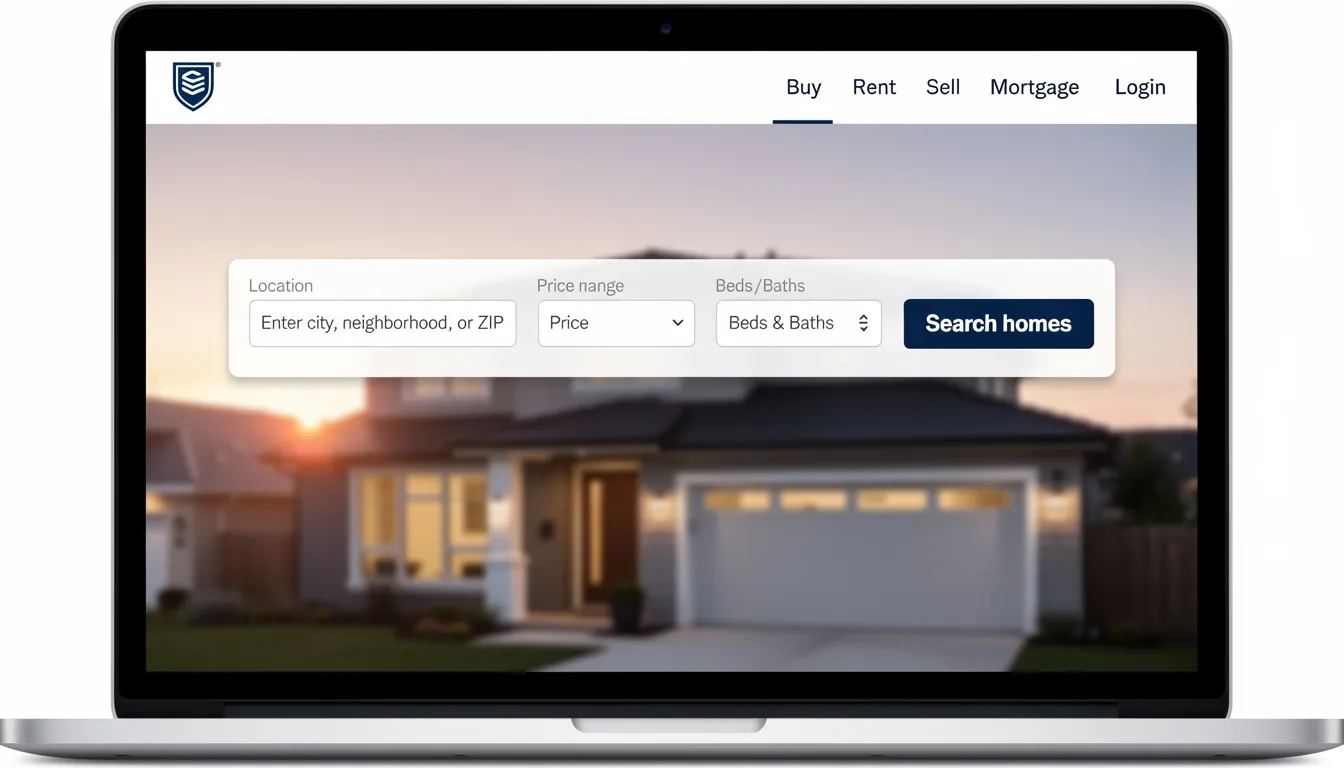
How an IDX Provider Works Behind the Scenes
While you and your clients see beautiful photos and map searches, the IDX provider is doing heavy lifting in the background to ensure that data is accurate and authorized.
Advanced IDX providers also offer built-in tools for landing page creation, lead magnet development, and property showcasing, as well as lead routing to efficiently assign new leads to the appropriate agents or teams.
MLS Data Access and Compliance
Your IDX provider manages a direct data feed from your local MLS, creating a continuous, authorized connection between your website and listing data. Because real estate listings are proprietary and governed by MLS rules, agents can’t simply scrape listings from the internet.
Need to know: As an agent, you must have explicit permission through the MLS and use an approved IDX provider to display listings legally and compliantly.
The provider handles the technical aspect of this permission. They ensure that every listing displayed on your site follows the specific display requirements of your board. This might include displaying the listing broker’s logo, updating data within a specific timeframe, or hiding certain private fields. Without an IDX provider handling this compliance, an agent would personally be liable for data misuse fines, which can be substantial.
Listing Updates and Accuracy
Real estate moves fast. A home listed at 9:00 AM might be under contract by 5:00 PM. An IDX provider ensures your website reflects these changes automatically.
If you were to upload listings manually, your website would be obsolete within hours. It is impossible to manually track price reductions, status changes to “pending” or “sold,” and new inventory for thousands of properties.
An IDX provider refreshes this data constantly—often every 15 minutes to an hour—so that when a client looks at a home on your site, they are seeing the current reality of the market. This accuracy is crucial for building trust; nothing frustrates a buyer more than falling in love with a home that sold three weeks ago.
What Does an IDX Provider Do On Your Website?
Even though the backend logic matter, the frontend experience is what captures clients. This is where the “provider” aspect shines, offering tools that make the data usable.
Advanced IDX providers offer features like map view and virtual tours, enhancing the property search experience by making property exploration more engaging and interactive for users.
Interactive map search functionality is now expected by buyers, with features such as polygon search and clustering for high-density areas improving usability. Some IDX platforms also include advanced features like natural language search capabilities, allowing users to search for properties using everyday language and simplifying the search process.
Let’s take a closer look at what you can expect by investing in this important tool.
Displays Searchable Property Listings
Raw data is useless if a buyer can’t filter it. An IDX provider powers the search bar, the interactive maps, and the filtering logic on your site. IDX listings and display listings are key features that enhance user experience and support lead generation by providing up-to-date, comprehensive, and customizable property information. They enable users to search by:
- Price range
- Number of bedrooms and bathrooms
- School districts
- Specific neighborhoods or polygon map boundaries
- Property types (condo, single-family, land)
Each listing acts as a new indexed page on the agent’s website, improving search engine rankings and increasing organic traffic.
Some IDX providers support the creation of community pages, which are pages on a real estate website focused on specific locations, property types, or search criteria. These pages are typically built from pre-filtered IDX listings and might highlight a particular neighborhood, subdivision, or price range. When used well, community pages can improve SEO and give buyers a more relevant browsing experience based on where and how they want to search.
Beyond community pages, many IDX solutions also make it possible to publish market report pages and neighborhood pages. These pages often summarize local market activity, pricing trends, and recent sales to help educate buyers and sellers.
By pairing market reports with neighborhood-focused content, agents can demonstrate local expertise, keep visitors engaged, and strengthen SEO with hyper-local signals that support long-term visibility.

Powers the Home Search Experience
Speed and usability are non-negotiable. If a user clicks a property and photos take several seconds to load, they’ll quickly return to a national portal. A quality IDX provider prioritizes performance, using optimized coding and modern delivery methods to ensure listings, photos, and data load quickly on any device.
Just as important, the experience should be fully responsive, so buyers can browse, search, and save properties seamlessly whether they’re on a desktop, tablet, or smartphone.
This user experience (UX) is the primary differentiator between a site that converts and one that doesn’t. Mobile responsiveness is also a major factor for keeping buyers engaged. If your search tools are clunky or slow, you are effectively sending your potential clients to competitors like Zillow or Realtor.com.
Customization and Branding with IDX Providers
A strong IDX website isn’t just about listings—it’s about how your brand shows up online. Leading IDX providers offer branding options that help real estate agents create a professional, recognizable website that stands out and drives more leads.
Common customization options include:
- Branded colors, fonts, and logos to match your business
- Flexible layouts and templates for your website
- Design controls that keep IDX listings consistent with your brand
With the right branding options, an IDX website builds trust, reinforces credibility, and helps agents stand apart from competitors. When your website looks polished and cohesive, visitors are more likely to stay, engage, and convert into more leads.
Lead Capture and Client Engagement Features
Of course, the ultimate goal of a real estate website is to generate leads.
An IDX provider includes specific features designed to turn anonymous traffic into known contacts. IDX websites use capture forms and lead capture forms to collect visitor information and capture leads.
IDX websites attract and capture leads through property search, often using lead capture forms to collect visitor information during the process.
Capturing Buyer and Seller Leads
IDX providers insert strategic “hooks” throughout the search experience. These include:
- Forced or Optional Registration: You can choose to let users see one or two photos before asking for an email address, or let them search freely until they want to save a search.
- Property Alerts: Users can sign up to receive email notifications the second a house hitting their criteria hits the market.
- Saved Searches: Buyers can “heart” or save properties to a favorites list, requiring them to create an account.
- Home Valuation Tools or Landing Pages: Offering interactive home valuation tools or dedicated landing pages helps capture seller leads by providing instant property value estimates and market reports.
Interactive financial tools, such as mortgage calculators, help qualify buyers by showing affordable price ranges.
Tracking Buyer Intent
This is perhaps the most valuable data an agent can possess. When a lead registers through your IDX provider, the system tracks their behavior. You aren’t just getting a name and phone number but a connection.
Leads view features allow agents to track and engage website visitors by monitoring user activity, capturing leads, and providing insights into what properties visitors are interested in.
Many IDX solutions also integrate directly with CRMs to send alerts and recommendations based on user behavior, helping agents respond quickly and effectively.
IDX Providers vs. Other Real Estate Website Tools
It’s sometimes easy to mix up IDX providers with other website tools. IDX sites are specifically designed for real estate professionals, offering MLS data integration and advanced property search features, unlike general website builders.
For those using WordPress sites, selecting a reliable WordPress plugin ensures seamless IDX integration, effective listing management, and optimal lead generation.
Popular IDX providers include iHomefinder, Showcase IDX, Realtyna, and IDX Broker.
READ MORE: Best Showcase IDX Alternatives for Real Estate Agents
IDX Provider vs. Basic Website Builder
Platforms like Squarespace, Wix, or WordPress are good for building general websites, but out of the box, they cannot connect to the MLS. You might be able to manually upload a few of your own listings, but you cannot display the thousands of other listings in your market.
To make a general website builder work for real estate, you’ll need to integrate a third-party IDX provider (often via a plugin or embed code). IDX solutions typically provide customizable search features that allow users to filter listings based on specific criteria. Without the IDX component, these builders are just digital brochures.
Some IDX providers also offer content packages, which include original articles, blog posts, and marketing materials to help real estate websites stay active and improve SEO.
Goodbye, iframes and subdomains. Hello, real estate customization!
IDX Provider vs. Real Estate Portals
Major portals aggregate listings from everywhere to sell ads. When you send a client to a portal, you are renting traffic on someone else’s platform—a platform that likely sells buyer leads to other agents.
When you use an IDX provider on your own website, you own the traffic. Integrating IDX technology into your own website is crucial because it allows you to control the user experience, showcase your brand, and provide clients with up-to-date listings directly on your platform. The branding is yours. The leads go only to you. It builds long-term brand equity and ensures that your clients are searching in an environment where you are the only real estate authority they see.
Additionally, the return on investment for IDX services can be significant if the platform effectively captures leads and integrates with your existing CRM systems.
How IDX Providers Integrate With Real Estate CRMs
To be totally optimized, your IDX provider should always “talk” to your Customer Relationship Management (CRM) system. The range of services provided by IDX platforms often includes branding, customization, advanced technology features, and crucially, integration with CRM systems.
Many IDX providers integrate with CRM systems to streamline lead management and follow-up processes.
When a lead registers on your site, that information should instantly flow into your CRM. This triggers automated follow-up plans, such as a welcome text or an email drip campaign. If your IDX and CRM are disconnected, you risk “lead leakage,” where a potential client sits in your website backend unnoticed for days while they go find another agent who responds faster.
Top-tier IDX providers often offer “two-way sync.” This means if a client saves a home on your website, it updates their profile in your CRM. Conversely, if you add a note in your CRM, it might adjust what property alerts they receive from the website.
What an IDX Provider Doesn’t Do (Common Misconceptions)
While powerful, an IDX solution is not the only fix for your real estate business. It is important to have realistic expectations about what the technology handles and what requires your effort. Choosing the right IDX provider isn’t about chasing features; it’s about finding a perfect match for your workflow now and as you grow.
- It does not replace a CRM: While some IDX tools have light lead management features, they are not full CRMs. They generally don’t handle transaction management, detailed distinct pipeline stages, or mass marketing automation.
- It does not automatically generate traffic: This is the most common frustration. You can build the best home search website in the world, but if no one visits it, you will get zero leads. You still need SEO, social media marketing, or paid ads to drive people to the site.
- It does not close deals for you: The IDX captures the lead; you must convert it. Technology cannot replace the phone call, the consultation, or the relationship building.
How to Choose the Right IDX Provider
Not all providers are created equal. When vetting technology partners, use this checklist to ensure you are getting a system that supports your growth.
- MLS Coverage: Do they actually have a relationship with your specific board?
- Update Frequency: How often is the data refreshed?
- Mobile Responsiveness: Test the map search on your phone. If it is difficult to use, do not buy it.
- CRM Integration: Does it connect natively to the CRM you already use?
- SEO Capabilities: Does the provider allow indexable pages, or is the data trapped in an unreadable frame (iFrames)? Indexable listings are far superior for SEO.
- Best IDX Platform: Evaluate which is the best IDX and best idx platform for your needs by comparing features like lead behavior tracking, automation, and seamless CRM integration.
Taking the time to evaluate these factors will help you choose an IDX provider that fits your business today and can grow with you as your needs evolve.
Why an IDX Provider Is the Foundation of a High-Performing Real Estate Website
An IDX provider is the foundation of a real estate website that actually performs. When listings are accurate, search is intuitive, and lead capture is built into the experience, a website becomes a guaranteed growth tool.
iHomefinder supports that entire journey. With flexible IDX solutions, listing pages, and seamless CRM integrations, iHomefinder helps agents turn their website into a true front door for their business—one designed to capture interest, convert leads, and grow with you over time.

