

You probably answer dozens of real estate questions every week. How much should a buyer offer for their home? Is now a good time to sell? Which neighborhoods have trendy homes or new construction options?
But when it’s time to write a blog post—your mind draws a blank. You’re suddenly fresh out of good ideas.
Luckily, you don’t need to reinvent the wheel or become a full-time content creator to maintain a useful real estate blog for your current or future clients. You just need to pay attention to what buyers and sellers are already asking.
Below, we’ll share 25 real estate blog ideas you can make your own. We’ll also share a few ways to choose topics that attract the right people to your website.
What should real estate agents blog about?
Real estate agents should blog about topics that help potential buyers and sellers make informed decisions. That might include firsthand neighborhood recommendations, local housing market stats, homebuying advice, or selling tips for quicker transactions.
The best real estate blog topics usually have two important things in common:
- They’re super relevant to your audience. They answer a question or solve a problem your potential clients actually have. No wasting time, no darting around the big issues.
- They draw on your expertise. They give readers information, context, or local insight they can’t easily find elsewhere. If you’re the agent they want to work with—it’s time to showcase why that’s the best idea.
When it comes to writing new posts (or content marketing in general), you don’t need to cover every single aspect of real estate. Start with the areas you serve, the clients you work with, and the questions you know how to answer.
25 real estate blog ideas to attract buyers and sellers
Think about the questions buyers and sellers ask, the neighborhoods they’re curious about, and the local insights you’re always texting someone about.
Short on time? We’ve rounded up 25 topics to get you started, organized by audience and subject. Use them to build a simple content calendar that keeps fresh, relevant content publishing week after week.
Neighborhood and community blog ideas
People researching a move want to know more than how many bedrooms they can afford. They want to understand what it’s like to live in a particular area.
Neighborhood content gives you a chance to share the local knowledge you’ve built through your regular work.
1. Living in [Neighborhood]: What Homebuyers Should Know
Introduce the area’s housing options, amenities, transportation, and other practical details, including nearby restaurants, bike paths, golf courses, public swimming pools, and summer camps. Include your own photos and observations where possible.
2. [Neighborhood A] vs. [Neighborhood B]: How Do They Compare?
Compare home prices, housing styles, commuting options, and nearby amenities to help buyers narrow their search. Highlight practical differences between neighborhoods, such as property taxes, school district boundaries, HOA fees, and access to public transportation, so buyers can make informed decisions based on their own priorities.
3. Moving to [City]? 10 Things to Know Before You Arrive
Create a relocation guide covering housing, transportation, utilities, and resources newcomers might not know about, along with local events and easy day trips or local getaways nearby.
4. Understanding School Boundaries in [County]
Explain how to research school assignments and where buyers can verify current district boundaries.
5. Where to Find New Construction Homes in [City]
Highlight local developments, available home styles, builder options, and considerations such as HOA fees or construction timelines.
👉 Pro Tip: Link these posts to relevant neighborhood pages or IDX property searches so readers can explore homes in the areas you’re discussing.
Homebuying blog ideas
Think about the questions buyers ask before they’re ready to schedule a showing. These topics can help you reach people earlier in their search and give them a reason to remember your name over the competition.
6. Buying Your First Home in [State]: Where to Start
Walk first-time buyers through financing, choosing an agent, searching for properties, and making an offer, with advice tailored to first-time homeowners and new homeowners.
7. How Much Are Closing Costs in [City]?
Explain common closing expenses, which costs buyers typically pay, and what can vary by transaction, along with estimates for property taxes.
8. Condo vs. Townhouse: Which Makes More Sense?
Compare ownership structures, maintenance responsibilities, HOA considerations, and lifestyle tradeoffs.
9. How Long Does It Take to Buy a House in [State]?
Break down the process from mortgage preapproval through closing, including common sources of delays.
10. What Happens After Your Offer on a House Is Accepted?
Explain inspections, appraisals, financing contingencies, and the steps buyers should expect before closing day.
Look for ways to make each topic relevant to your local market. For example, instead of simply explaining what “earnest money” is, describe how it works in your zip code.
Want to go deeper? You can also bring in a local mortgage specialist to answer common financing questions and offer additional expertise.
Home selling blog ideas
Sellers have plenty of questions, too. And many start researching their options long before they contact an agent. Use these real estate blog ideas to help homeowners understand what goes into a successful sale.
11. 7 Things to Do Before Listing Your House
Cover cleaning, repairs, staging, photography, and other preparation tasks worth prioritizing, including how to prepare for an open house and improve listing photos.
12. How Do Real Estate Agents Determine a Listing Price?
Explain comparable sales, current competition, property condition, and local demand.
13. How Much Does It Cost to Sell a House in [State]?
Break down commissions, closing expenses, repairs, and other potential costs.
14. Which Home Updates Are Worth Making Before You Sell?
Discuss home improvement ideas that may appeal to buyers, along with home decorating tips that help a home show better and projects that might not justify their expense.
15. How Long Does It Take to Sell a House in [City]?
Use current local market data to explain typical timelines and factors that influence how quickly homes sell.
Selling-focused posts also create natural opportunities to invite readers to request a home valuation or discuss their selling plans.
Real estate market and industry blog ideas
Market updates are a natural fit for real estate blogging. But there’s a difference between publishing static numbers and helping someone understand them.
Your readers probably don’t need another chart showing median home prices from last year. They care about housing trends and real estate trends that affect them personally. That means you’re not just sharing raw numbers. You need to know what those numbers mean for your clients’ next move.
Try these topics:
16. [City] Housing Market Update: [Month and Year]
Summarize prices, inventory, days on market, and home sales, then explain what changed and whether conditions look more like a seller’s market.
17. Are More Homes Coming on the Market in [City]?
Explore inventory trends and what they could mean for buyer choices and seller competition, while noting how industry trends can shape shifts in demand.
18. Are Home Prices Rising or Falling in [County]?
Compare recent price trends and explain why averages don’t tell the whole story.
19. How Do Mortgage Rates Affect Buying Power?
Use a simple example to show how different interest rates can change monthly payments.
20. Renting vs. Buying in [City]: What to Consider
Compare upfront costs, ongoing expenses, flexibility, and other practical considerations.
Put a date on every market update and link to reliable sources like the National Association of Realtors. Readers need to know where your numbers came from and how current they are. Older posts can still bring in traffic, but make sure visitors know when the information was published.
Local lifestyle and resource blog ideas
Give readers a feel for what it’s actually like to live in your area. Highlight local businesses, new employers, job opportunities, and places residents visit regularly.
These posts help people get to know a community before they move there. They also give you a chance to share the local knowledge that sets you apart from other agents. You might even find that they become your biggest clicks—or your hottest social media posts.
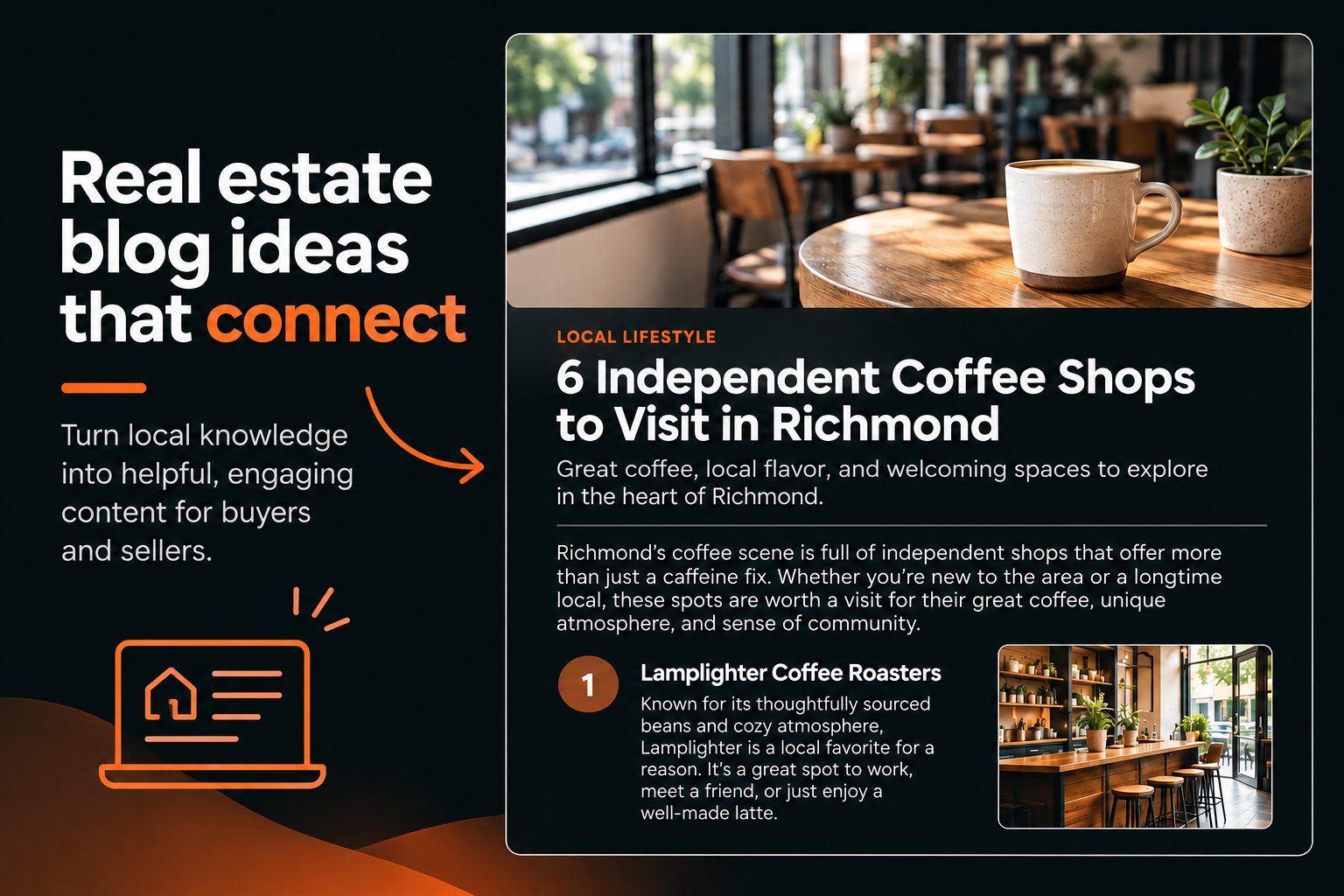
21. 6 Independent Coffee Shops to Visit in [City]
Highlight local coffee shops, including their specialties, atmosphere, locations, and what makes each one worth visiting.
22. A Guide to Parks and Walking Trails in [County]
Introduce popular parks, trails, and outdoor recreation areas, including parking, amenities, accessibility, and activities for different ages.
23. Annual Community Events Worth Knowing About in [City]
Share local festivals, farmers markets, holiday celebrations, and other recurring events that give residents opportunities to connect with their community.
24. What to Know About Commuting From [Suburb] to [City]
Compare common commuting routes, typical travel times, public transportation options, and factors that could influence where buyers choose to live.
25. Grocery Stores, Libraries, and Everyday Amenities in [Neighborhood]
Help prospective residents get familiar with the area by highlighting nearby grocery stores, libraries, shopping centers, healthcare facilities, and other everyday conveniences.
Keep these posts useful and specific. Include addresses, official resource links, practical details, and original photos when you can. Choose topics that genuinely help someone researching your market, and imagine yourself living in their shoes.
| Pro tip: Let us handle the first draft. Coming up with blog ideas is one thing. Finding time to write them between showings, listing appointments, and closings is another. iHomefinder’s Visibility Agent helps you create blog posts using actual MLS data and your own local expertise. Whether you’re writing a neighborhood guide, a monthly market update, or advice for first-time buyers, the AI assistant incorporates your insights and market data into content you can review, edit, and publish. You bring your real estate expertise. Then, let our visibility-focused AI do the heavy lifting. |
How to choose the right real estate blog topics
Now you have 25 ideas. Which one should you write first? Before opening a blank Google doc, try these three steps.
1. Start with questions your clients already ask
Look through recent emails, text messages, and conversations. What have you explained more than once this month?
Maybe buyers keep asking whether they should wait for mortgage rates to fall. Or sellers want to know if they need to replace their old carpet or flooring before listing a house. Those are potential blog posts that you can answer with your lived-in expertise.
You already know the questions. Now give your answers a permanent spot on your website.
2. Focus on your local market
A post titled “Tips for Buying a Home” could appear on practically any real estate website. But “What First-Time Buyers Should Know About Buying in Dallas, TX” speaks to a more specific audience and the questions they’re likely searching for.
This approach also supports your local SEO strategy. By creating content around specific cities, neighborhoods, and local real estate questions, you give search engines more context about the markets you serve. You also have more opportunities to appear in relevant local searches and attract visitors who may be looking for an agent in your area.
You can also link these posts to relevant neighborhood pages, market reports, and IDX property searches on your website. That gives readers a natural next step while helping search engines understand how your local content connects.
| Big picture: You want to become the most useful resource for people researching your market, whether they’re ready to contact an agent today or just beginning to explore their options. |
3. Check what people are actually searching for
You don’t need expensive SEO software to get started. Type a question into Google and look at autocomplete suggestions, “People Also Ask”, or related searches. Check Google Search Console to see which queries already bring visitors to your website. That research can also guide your writing so each post matches what people are actually searching for.
Look for overlap between what people search for and what you know well. That’s a good place to start.
How to turn your real estate blog into a lead-generation tool
Getting someone to read your blog is a great first step when you want to build a memorable connection. But next, you need to give them somewhere to go that means something.
Don’t send readers back to Google to keep researching. Link to your own relevant neighborhood pages, market reports, and property searches—right on your site. Make it easy for them to take the next step, and give yourself more opportunities to turn those visits into workable leads.
For example:
- Neighborhood guides: Link to homes currently for sale in that neighborhood
- Market updates: Direct readers to relevant market pages and available listings
- First-time buyer guides: Include a link to start a property search
- Selling tips: Offer a way to request a home valuation
- Relocation guides: Help readers explore nearby communities and housing options
How often should real estate agents publish blog posts?
There’s no magic number of blog posts that guarantees better search rankings or more leads.
If you’re just getting started, try publishing 2-4 useful posts per month.
One could answer an evergreen question, like how closing costs work. The other might cover a neighborhood, local market trend, or timely buyer concern.
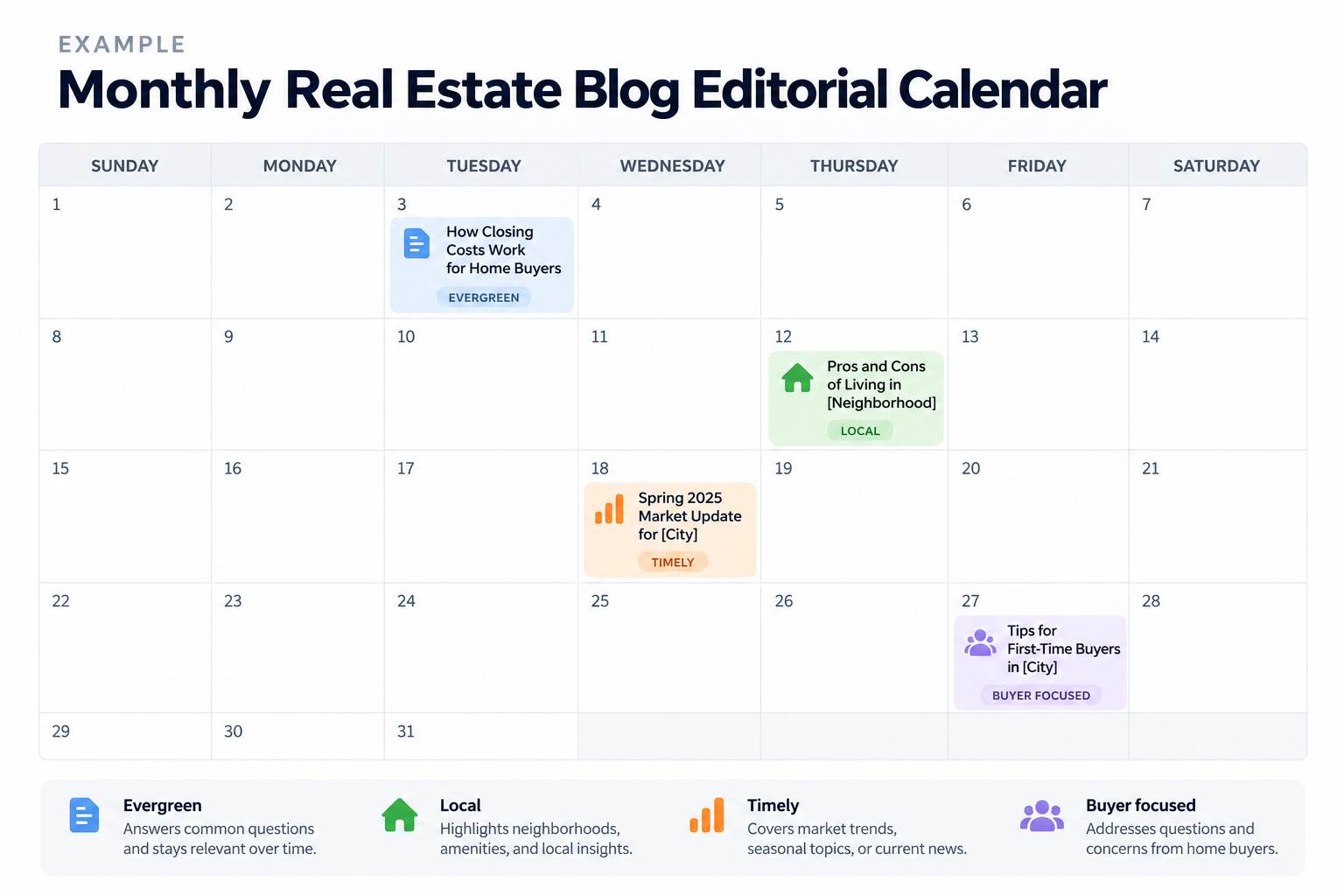
Then, spend some time updating older posts. Check that links work, market information is current, and your advice still reflects local conditions. A manageable schedule you can maintain is more valuable than publishing ten posts one month and disappearing for six.
Turn your real estate blog into a lead generation tool
Getting people to read your blog is only part of the equation. What happens after they finish reading? At that point, it’s your real estate website’s time to shine.
With iHomefinder, you can connect helpful blog content to IDX property searches, neighborhood pages, and lead capture opportunities. Someone reading your neighborhood guide can explore available homes. A visitor checking local market trends can take the next step in their home search.
Ready to turn more website visitors into potential clients? Check out iHomfinder’s real estate solutions, and see how your content and property search experience can work together.
Frequently asked questions about real estate blogging
Is blogging still worth it for real estate agents?
Yes, blogging can help agents demonstrate local expertise, answer potential clients’ questions, and attract visitors through organic search. Results depend on content quality, competition, website performance, and other factors. Blogging works best as part of a broader marketing strategy for a real estate professional.
What should a new real estate agent blog about?
Start with neighborhoods you know, local resources, and questions first-time buyers frequently ask. You don’t need a long transaction history to publish helpful content. Focus on accurate information and insights you can confidently explain.
How long should a real estate blog post be?
Write enough to answer the question thoroughly without adding unnecessary information. A simple FAQ might need a few hundred words, while a detailed neighborhood guide could be considerably longer. There’s no ideal word count for every topic.
Can AI help real estate agents write blog posts?
Yes. AI tools can help brainstorm topics, organize outlines, and improve drafts. But your firsthand knowledge is what makes the content valuable. Always verify factual claims, especially housing statistics, legal requirements, and market-specific advice.